
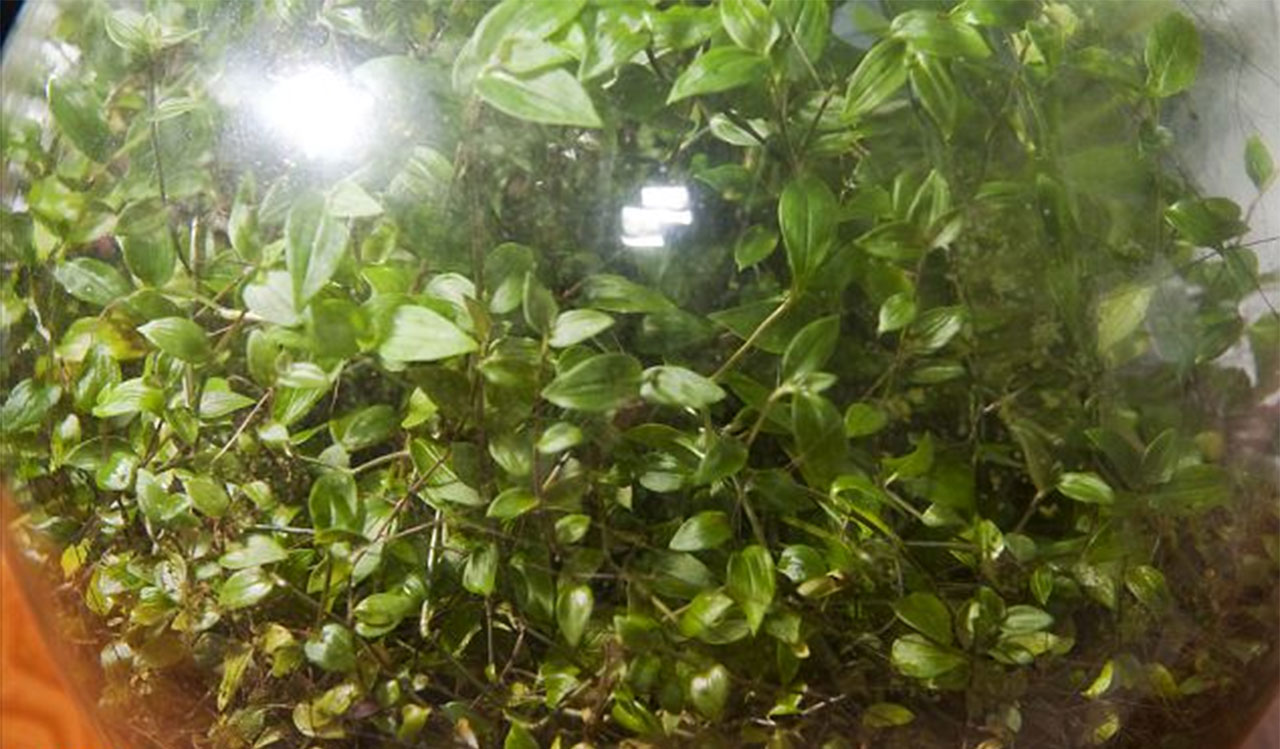
There's a plant that has survived in a sealed bottle for over 65 years. It was watered just once in 55 years.
The Bottle Garden That's Thrived Sealed for 60+ Years
Imagine sealing a plant in a glass bottle, giving it one drink of water, and then closing it up for decades. Sounds like a death sentence, right? Yet David Latimer's bottle garden has been thriving in its sealed glass prison since 1960—watered exactly once in 1972 before being hermetically sealed shut.
That's over 50 years without a single drop of water added from outside. No pruning. No fertilizer. No fussing whatsoever.
A Self-Sustaining World in Glass
Latimer, a retired electrical engineer from Surrey, England, started his experiment with a large glass carboy—the kind used for fermenting wine. He planted a single Tradescantia (spiderwort) seedling, gave it a splash of water in 1960, added another in 1972, then sealed the bottle completely. The plant hasn't had access to outside air or water since.
The bottle sits near a window in his home, rotating occasionally to ensure even light distribution. That's it. That's the entire maintenance routine.
How Does This Even Work?
The bottle garden operates as a closed ecological system, recycling everything it needs:
- Water cycle: The plant releases water vapor through transpiration, which condenses on the glass walls and rains back down into the soil
- Oxygen/CO2 exchange: Photosynthesis produces oxygen during the day; respiration consumes it at night, creating a perfect balance
- Nutrient recycling: Dead leaves decompose into compost, feeding the plant through bacterial breakdown
- Energy input: Sunlight provides the only external resource needed to power the entire system
It's essentially a miniature Earth—a completely self-sufficient biosphere operating inside 10 gallons of glass.
The Plant That Refuses to Die
The Tradescantia has grown to fill nearly the entire bottle, its leaves pressed against the glass walls. It's adapted to its confined environment, growing in a dense, lush pattern that maximizes its use of available space and light.
The plant has likely gone through countless generations of leaves—each one living, dying, decomposing, and feeding the next cycle of growth. The bacteria in the soil have been equally busy, breaking down organic matter and releasing nutrients in a perpetual loop.
Not Quite Maintenance-Free
Latimer does rotate the bottle every so often to ensure all sides get adequate sunlight. Without this, the plant would grow lopsided, reaching desperately toward the light source. But that's the extent of human intervention—a quarter-turn every few weeks.
The bottle stays near a window but not in direct harsh sunlight, which could overheat the enclosed system and cook the plant alive. Indirect light provides enough energy without turning the bottle into a greenhouse pressure cooker.
A Living Lesson in Ecosystems
Latimer's bottle garden demonstrates the fundamental principles of closed-loop sustainability. Every output becomes an input. Nothing is wasted. Energy flows in from the sun, but matter cycles endlessly within the system.
Scientists have studied similar closed systems for decades, particularly for understanding how life support might work on long-duration space missions or planetary colonies. If humans want to survive on Mars or in deep space, we'll need to master exactly what this little plant has been doing naturally for over 60 years.
The bottle garden proves that with the right balance, life finds a way—even when sealed off from the world in a glass tomb that somehow became a thriving paradise.
Enjoyed this? Get a new fact every morning.
A fascinating fact in your inbox every morning. Free. Unsubscribe anytime.
Frequently Asked Questions
What plant survives in a sealed bottle for years?
How can a plant live in a sealed bottle without water?
How often do you need to water a sealed bottle plant?
Why don't plants in sealed bottles need much water?
Can you make a sealed plant bottle at home?
Verified Fact
This fact has been reviewed and verified against original sources.
Show verification details
This refers to David Latimer's sealed bottle garden, started in 1960 and last watered in 1972 before being sealed. Still thriving as of recent reports.