Chris Lemons was a saturation diver left alone on the North Sea floor in 2012 when his umbilical - supplying gas, heat and light - was severed by a drifting ship. He had about five minutes of emergency gas. Colleagues found him around 30 minutes later, unconscious on the seabed. Two rescue breaths brought him back, with no lasting brain damage.
The Diver Left Alone on the Seabed With Five Minutes of Air
On the night of September 18, 2012, a routine maintenance dive in the North Sea turned into something no safety manual had prepared anyone for. A diver ended up alone on the ocean floor, without light, without heat, and without air - for far longer than the human body should allow.
300 Feet Down, Alone in the Dark
Chris Lemons and his two colleagues, Duncan Allcock and David Yuasa, were saturation divers working from the dive support vessel Bibby Topaz, stationed at the Huntington oil field around 200 km east of Aberdeen. They had been living in a pressurised hyperbaric chamber aboard the ship for days - saturation diving requires divers to spend their entire work rotation at depth pressure to avoid the repeated decompression sickness risk of surfacing each day.
That night, the vessel's dynamic positioning system failed in rough weather. The ship began to drift. The umbilical tethering Lemons to the diving bell - supplying his heliox breathing gas, hot water heat, power and communications - snagged on a steel platform and snapped. He was left at 90 metres (300 feet), in near-freezing water, in complete darkness, with only the emergency bailout cylinders on his back.
Five Minutes of Gas
Those cylinders held approximately five minutes of breathable gas. Lemons managed to find his way back to the subsea manifold and clipped himself to the structure. Then his gas ran out. He lost consciousness on the seabed floor.
On the surface, his colleagues had no direct route to him. The diving bell had been pulled away by the drifting ship. They sent the vessel's remotely operated vehicle - an ROV - down into the darkness to find him.
Around 30 Minutes Later
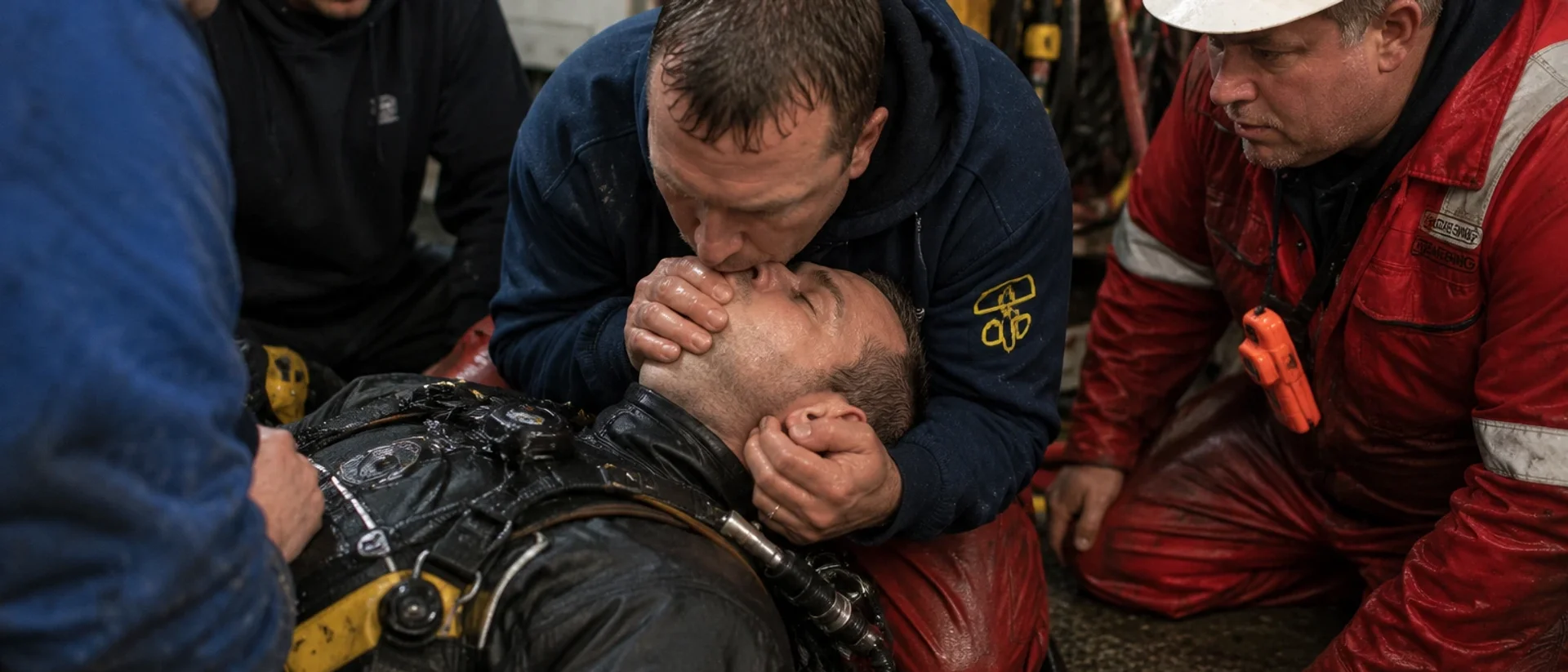
The ROV located Lemons lying motionless on the seabed roughly 20 minutes after the umbilical severed. Yuasa was able to get to him and pull him into the diving bell. When they removed his helmet, Allcock gave him two rescue breaths. Lemons began breathing spontaneously within seconds.
Medical records from the incident show his core body temperature on recovery was between 27 and 29 degrees Celsius - stage 2 to 3 hypothermia. The cold water had almost certainly slowed his metabolism enough to protect his brain from oxygen starvation. He underwent a 78-hour decompression protocol, passed cognitive assessments, and suffered no neurological injury.
Back in the Water Three Weeks Later
Chris Lemons returned to professional saturation diving three weeks after the incident. He has since attended multiple medical conferences and consulted numerous specialists trying to understand how he survived. The honest answer remains: no one is entirely sure.
The incident was documented in the 2019 Netflix documentary Last Breath, which used real ROV footage and helmet-camera audio recorded on the night. A dramatised feature film of the same name was released in cinemas in early 2025, starring Woody Harrelson, Simu Liu and Finn Cole.
Frequently Asked Questions
What happened to Chris Lemons the saturation diver?
How did Chris Lemons survive without oxygen for 30 minutes?
What is saturation diving?
What is the film Last Breath about?
Did Chris Lemons return to diving after the accident?
Verified Fact
Verified Feb 28, 2025 · 4 sources checked
Source: NCBI / PMC (Peer-Reviewed Medical Case Study)Show verification details
Claims checked
- Umbilical severed by drifting ship, leaving diver on seabed
- Emergency gas lasted about five minutes
- Found unconscious roughly 30 minutes later, revived with two rescue breaths
- No lasting brain damage after rescue
Sources: NCBI/PubMed, Wikipedia, Energy Voice
Related Topics
More from People & Mind
View all People & Mind →