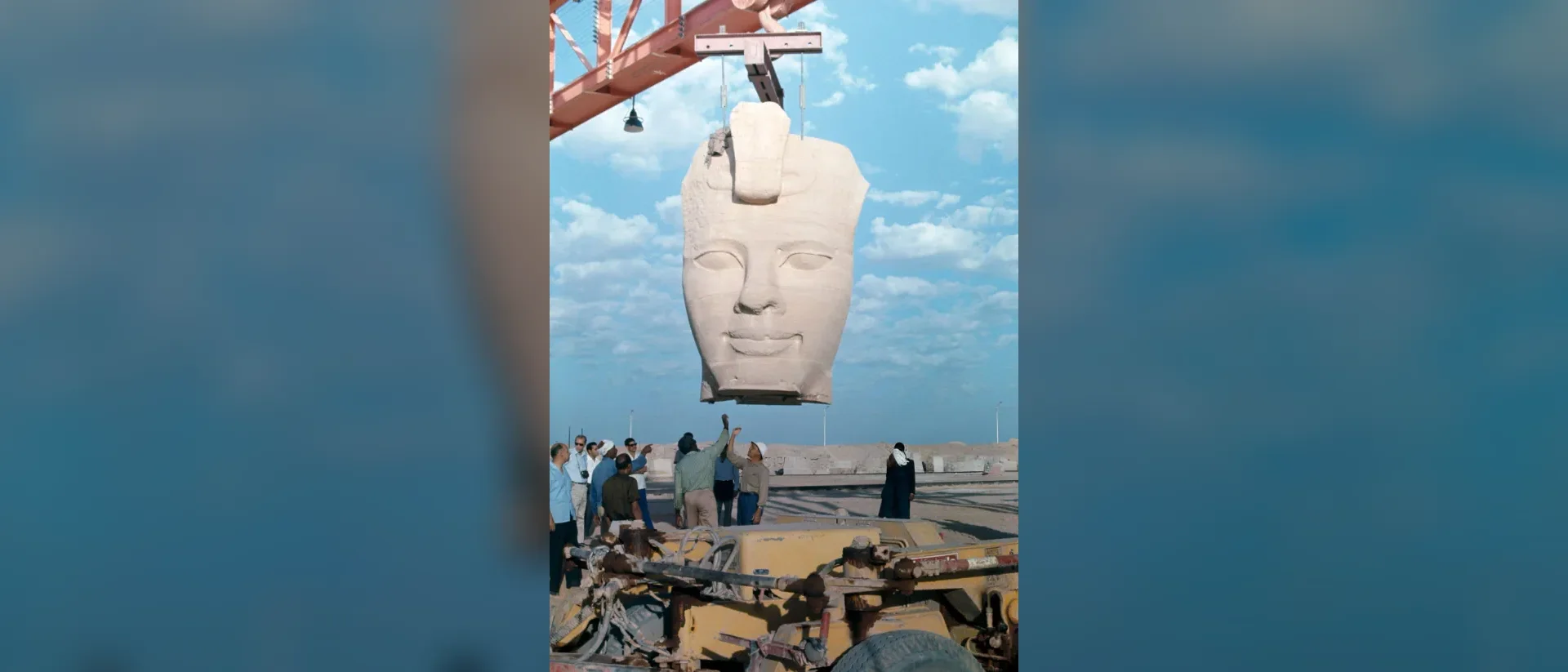
Abu Simbel's colossal temples were carved by Ramesses II 3,200 years ago. When Egypt's Aswan Dam threatened to flood them, Egypt and 48 nations raised $40 million. Engineers sliced the temples into 1,000+ blocks - some weighing 30 tons - then rebuilt everything 65 meters higher. The solar alignment still works.
Egypt Cut a Temple Into 1,000+ Pieces and Moved It
In the 1960s, engineers faced something the world had never attempted: move two ancient temples, each carved directly into a solid sandstone cliff. The temples at Abu Simbel, built by Pharaoh Ramesses II more than 3,200 years ago, were about to vanish beneath the rising waters of Lake Nasser. What followed became one of the most ambitious rescue operations in history - and changed the way the world protects its heritage.
Built Into the Rock
Ramesses II ordered Abu Simbel carved into a clifftop in southern Egypt around 1264 BCE. The main Great Temple features four colossal seated statues of the pharaoh, each about 20 meters tall. Behind the facade, the temple extends deep into the rock, ending in an inner sanctuary. The designers placed that sanctuary at a precise angle so sunlight would illuminate the face of Ramesses on two specific days each year: February 22 and October 22.
The Dam That Threatened Everything
Construction of Egypt's Aswan High Dam began in 1960, and the resulting Lake Nasser would eventually submerge the Abu Simbel site entirely. Egypt alerted UNESCO, which launched the International Campaign to Save the Monuments of Nubia that same year. The appeal went worldwide: help save these temples.
48 countries responded, contributing funds and expertise. The total cost reached $41.7 million - around $436 million in today's money - with Egypt covering half and international donations making up the rest.
Cutting the Temple Apart, Block by Block
Engineers evaluated several rescue options, including building a protective structure around the site. A consortium of engineers proposed the plan that was chosen: cut the entire complex into numbered pieces and reassemble it on higher ground.
Block removal began in May 1965. Workers cut the temples into 1,036 sandstone blocks. Interior ceiling blocks were kept under 20 tons to prevent cracking; the massive facade blocks could weigh up to 30 tons. Every block was catalogued and numbered before removal.
Rebuilt 65 Meters Higher
Workers constructed a new artificial cliff 208 meters inland and 65 meters above the original site. Engineers built internal concrete domes to support the temple chambers, then covered the structure with rock to match the original cliff's appearance. All 1,036 blocks were reassembled on this new foundation.
The official inauguration took place on September 22, 1968 - 18 months ahead of schedule. The solar phenomenon still works: sunlight reaches the innermost chamber twice a year, now on February 21 and October 21, one day earlier than Ramesses originally designed.
A Project That Changed the World
Abu Simbel was not the only site saved. The UNESCO Nubia campaign relocated or documented 22 ancient monuments in total before Lake Nasser rose. The project's success directly inspired the UNESCO World Heritage Convention in 1972 - the international agreement that today protects more than 1,100 sites, from Stonehenge to the Great Barrier Reef. Abu Simbel is one of the reasons it exists.
Frequently Asked Questions
Who built the Abu Simbel temples?
Why were the Abu Simbel temples moved?
How many countries helped relocate Abu Simbel?
How many blocks was Abu Simbel cut into?
Does the Abu Simbel solar alignment still work after the move?
Verified Fact
Verified Jun 28, 2026 · 2 sources checked
Source: WikipediaShow verification details
Claims checked
- Built by Ramesses II around 1264 BCE, about 3,260 years ago
- Relocation cost $40 million, split between Egypt and 48 nations
- Temples cut into 1,036 blocks, some weighing up to 30 tons
- Rebuilt 65 meters higher and 208 meters inland; solar alignment still works
- Inaugurated September 22, 1968, 18 months ahead of schedule
Sources: Wikipedia, Egypt Tours Portal
Related Topics
More from Places & Culture
View all Places & Culture →