Hoover Dam's spillway tunnel tore itself open in 1941. After a gate dropped without warning, water roaring down the Arizona spillway gouged a hole about 115 feet long, 30 feet wide and 45 feet deep, through the concrete and into the rock. The 1983 flood damaged the tunnels again. Today Lake Mead sits so low that the dam's two spillways stand bone dry, about 165 feet above the water.
The Hole Water Tore Inside Hoover Dam
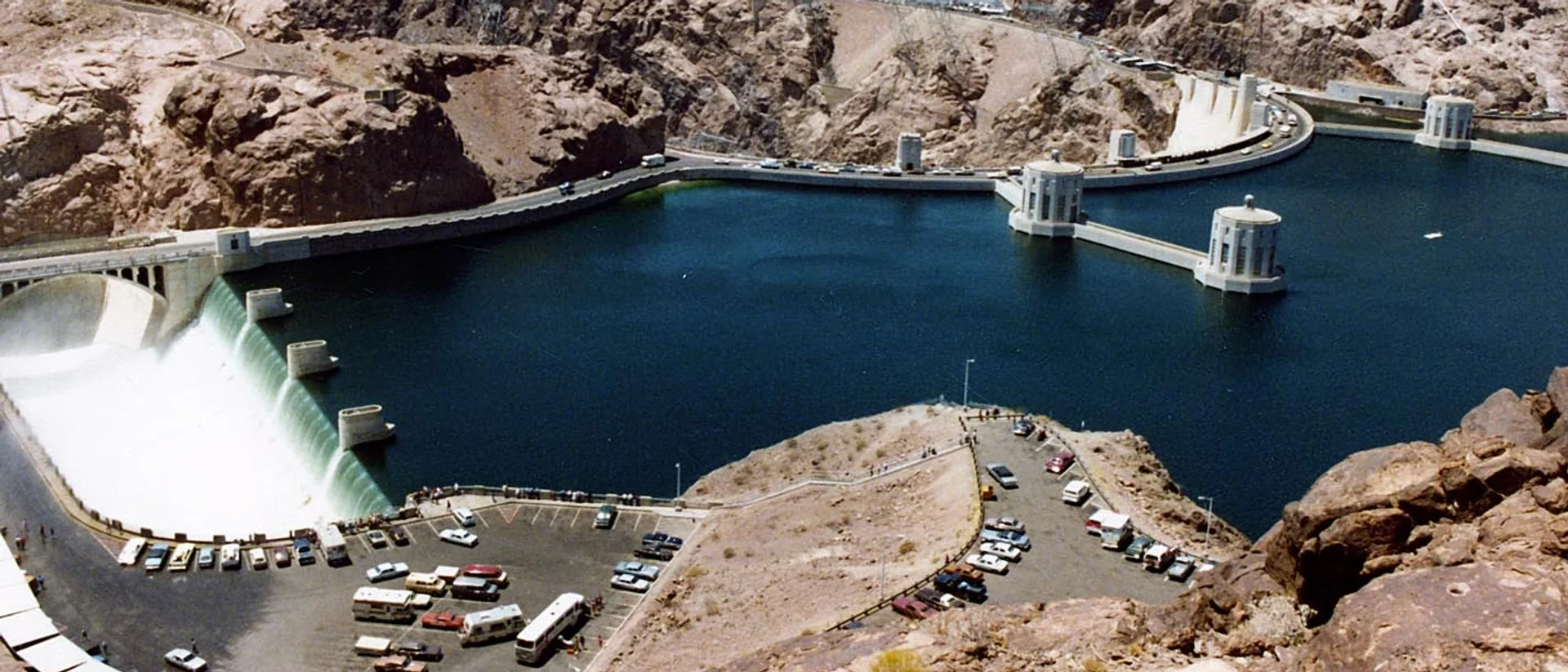
Hoover Dam has two giant spillways built to carry floodwater around the dam, and they have been used only twice. Both times, the rushing water badly damaged the tunnels. Today, with Lake Mead near record lows, the spillway channels stand dry.
Two Tunnels Built for Niagara-Sized Floods
A spillway sits behind each end of the dam, and each one is a safety valve. The entrances are 27 feet below the top of the dam, so water only goes in if the lake climbs almost to the crest.
Each spillway has four steel drum gates, each 100 feet long and 16 feet high. Each gate weighs about 5 million pounds.
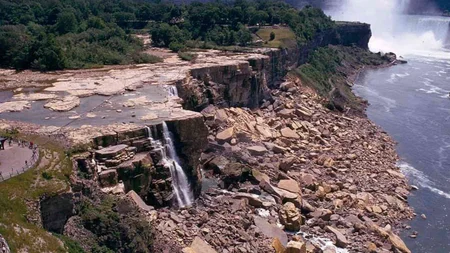
Behind the gates, the water drops into a steep tunnel about 600 feet long and 50 feet across. The Bureau of Reclamation says each spillway can handle 200,000 cubic feet per second, about the flow of Niagara Falls.
The Gate That Dropped
The Arizona spillway ran for the first time on August 6, 1941. After a hurried inspection on August 14, engineers found the tunnel lining intact.
Operations continued, and on October 28, 1941, one of the drum gates dropped without warning. The flow through the Arizona spillway peaked at 38,000 cubic feet per second that day.
That much water falling 600 feet down a steep tunnel eroded the lining. The eroded area was about 115 feet long and 30 feet wide, with a maximum depth of about 45 feet, a cavity of roughly 1,070 cubic yards.
Engineers later attributed the damage to cavitation, where vapor bubbles in fast water collapse with explosive force. Engineers who inspected the tunnels found major damage to the concrete linings and the rock underneath.
Patched, Polished, Tested Again
Repair work started almost immediately. Crews used a pack-and-inject concrete process, and then polished the tunnel smooth to help prevent more erosion. In 1947 the spillways were modified with flip buckets, which slow the water and reduce the spillway's effective capacity.
In 1983, record flows into Lake Mead sent water through the spillways for the second time. The record flows again eroded the concrete base of the tunnels, and the damage had to be repaired. That damage was also cavitation, and air slots called aerators were added afterward.
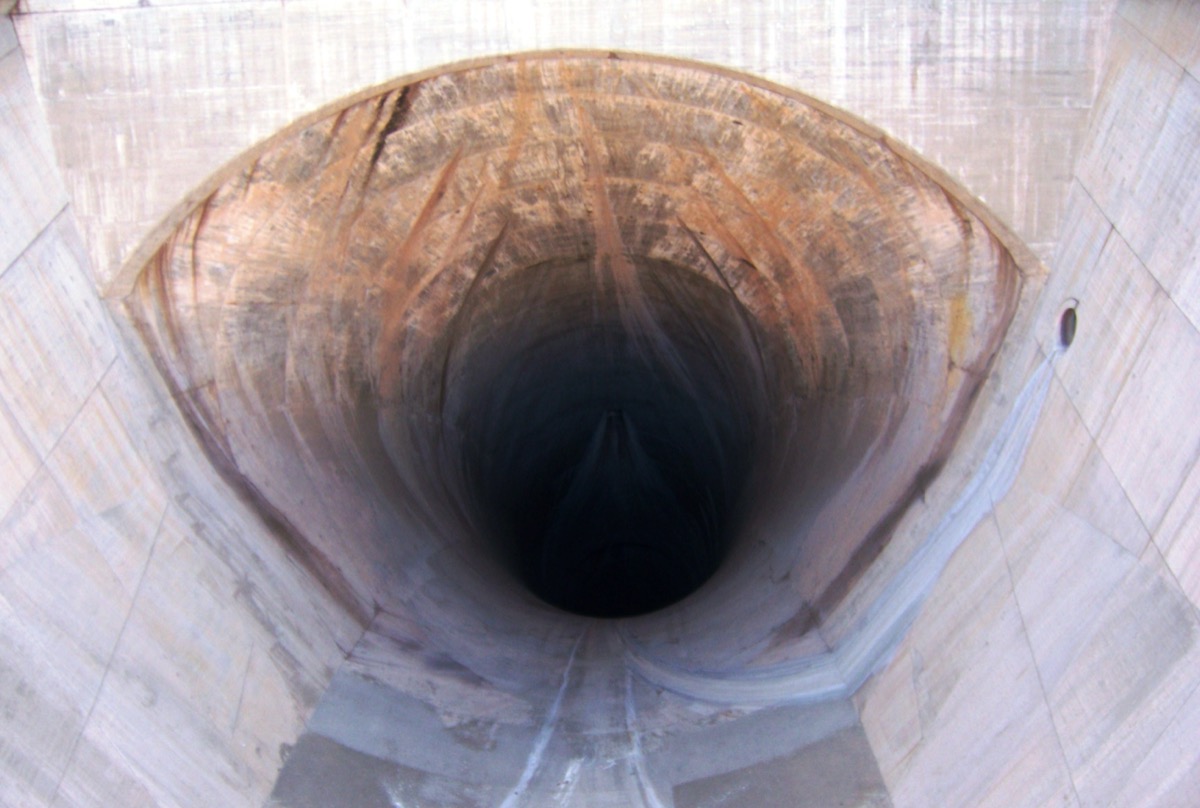
Bone Dry Today
The spillway entrances sit at roughly 1,205 feet above sea level. Lake Mead set a record low of about 1,040.5 feet in August 2026 and has stayed below 1,040 feet since, so the water is roughly 165 feet below the spillway entrances.
Both channels are empty, and the tunnels that water once chewed through are waiting for a flood that the lake is nowhere near.
Source:U.S. Bureau of Reclamation
Enjoyed this fact?
Be the first to love this
Get a new fact every morning.
A fascinating fact in your inbox every morning. Free. Unsubscribe anytime.
Frequently Asked Questions
Has Hoover Dam's spillway ever been used?
How big was the hole in the Hoover Dam spillway?
What caused the damage inside the Hoover Dam spillway tunnels?
Are the Hoover Dam spillways dry now?
Verified Fact
Verified Oct 16, 2026 · 3 sources checked
Source: U.S. Bureau of ReclamationShow verification details
Claims checked
- Gate dropped without warning on Oct 28 1941 and water gouged a hole about 115 ft long, 30 ft wide and 45 ft deep
- The tunnel lining was intact after the first run in August 1941
- Damage reached the concrete lining and the rock beneath it
- Record 1983 flows damaged the spillway tunnels again
- Spillways are dry, roughly 165 ft above Lake Mead
Sources: Bureau of Reclamation, Wikipedia, Western Water
Related Topics
More from Places & Culture
View all Places & Culture →