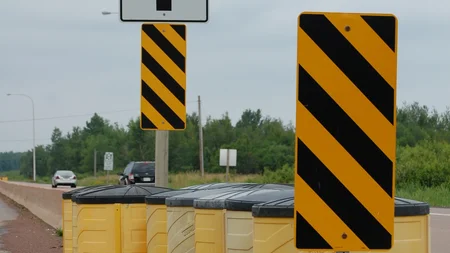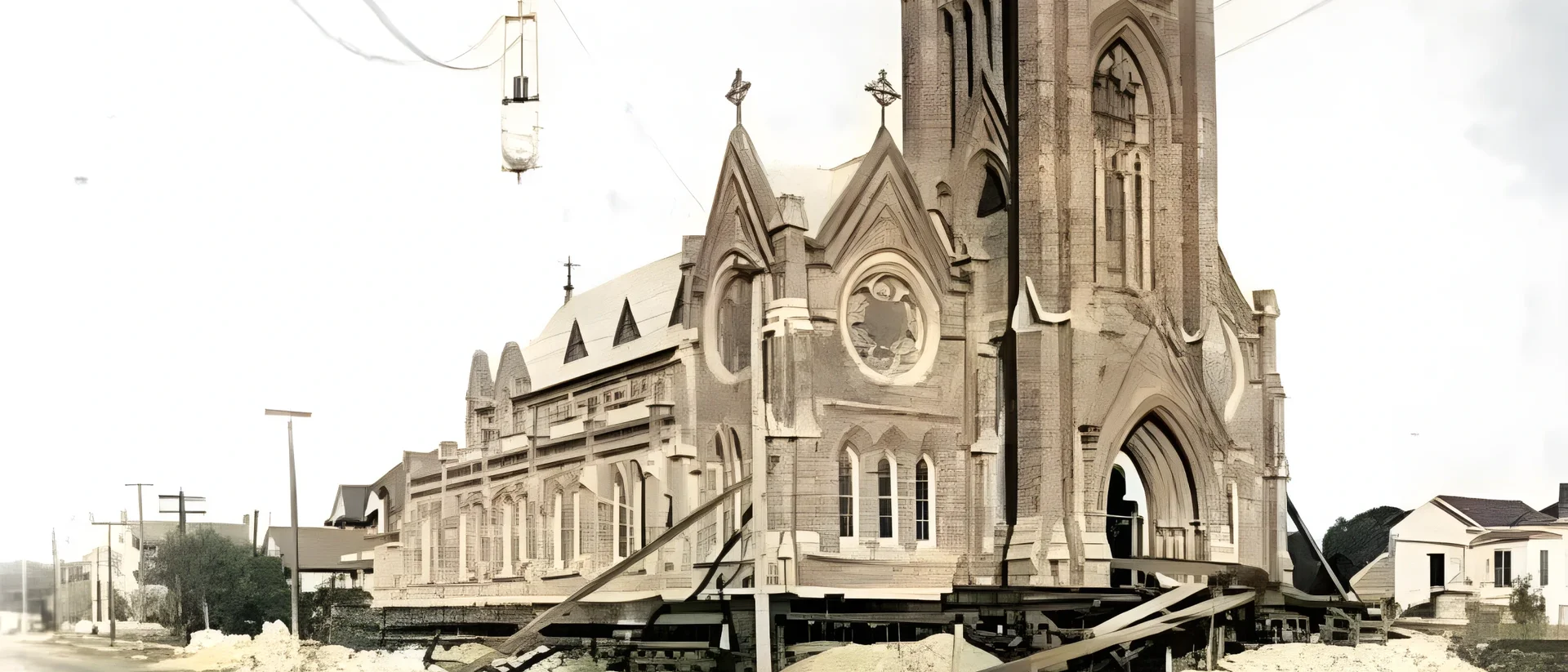
Galveston jacked its entire city into the sky. After the 1900 hurricane killed an estimated 8,000 people, crews put 2,000+ buildings on hand-cranked jackscrews, raising some up to 17 feet, including this 3,000-ton church. The 1915 hurricane killed only 11.
Galveston Jacked Its Entire City Into the Sky
Picture a three-story brick building, streetcar tracks and all, sitting on hundreds of hand-cranked screws while a crew turns them in unison a quarter-turn at a time, inch by inch, block by block. That was daily life in Galveston, Texas for seven straight years.
A City Barely Above the Water
Before 1900, Galveston sat only five or six feet above sea level, an easy target for the Gulf of Mexico.
On September 8, 1900, a hurricane hit the island and left an estimated 8,000 people dead, making it the deadliest natural disaster in U.S. history.
City leaders and engineers concluded that a seawall alone would not be enough. The island itself had to be higher.
Turning the Whole City Into a Job Site
Between 1904 and 1911, Galveston raised roughly 500 city blocks, working one quarter-mile section at a time.
Crews built a temporary dike around each section, then slid jackscrews under more than 2,000 buildings, along with fences, streetcar tracks, water pipes and fire hydrants.
Workers turned the screws in coordinated quarter-turns so structures rose evenly without cracking.
Dredges cut a 2.5-mile canal straight through the city, then pumped roughly 16 million cubic yards of sand slurry through pipelines into the gap beneath the raised buildings.
For years, residents got around on wooden catwalks built on top of fences while the fill settled underneath.
A 3,000-Ton Church on 700 Jackscrews
The heaviest single job was St. Patrick's Catholic Church, an estimated 3,000 tons of brick and stone.
Engineers set 700 jackscrews beneath it and raised the entire building five feet.
Homes, schools and one of the city's largest churches all went up the same way, one careful turn at a time.
The Storm That Proved It Worked
In August 1915, a hurricane of comparable strength to the 1900 storm hit Galveston again.
This time the 17-foot seawall and the raised grade held. Roughly 11 people died on the island, a fraction of the estimated 8,000 lost fifteen years earlier.
Property damage was heavy, but the city itself stayed standing.
A National Landmark
The American Society of Civil Engineers has designated the Galveston seawall and grade raising a National Historic Civil Engineering Landmark, recognizing it as one of the largest municipal engineering projects of its era.
More than a century later, the raised streets, seawall and the buildings that rode out the work on jackscrews are still part of daily life on the island.
Frequently Asked Questions
Why did Galveston raise its entire city?
How did they raise buildings on jackscrews?
How much did Galveston raise its buildings?
Did the Galveston grade raising actually work?
How much sand did the Galveston grade raising use?
Verified Fact
Verified Jul 24, 2026 · 5 sources checked
Source: American Society of Civil Engineers (ASCE)Show verification details
Claims checked
- 1915 hurricane killed 11 on Galveston Island
- Residents lived in raised homes during the fill process
- 2,000+ buildings raised up to 17 feet over ~500 city blocks
- St Patrick's Church (3,000 tons) raised 5 feet
- 16.3M cubic yards of fill and 2.5-mile canal
Sources: American Society of Civil Engineers, Galveston Historical Center, Wikipedia, Texas Highways, Rosenberg Library
Related Topics
More from Places & Culture
View all Places & Culture →