San Francisco's Financial District is built on top of more than 40 Gold Rush ships, possibly 70 or more. In 1849, crews abandoned their vessels to chase the gold rush, then built new streets right over the hulls. Workers hit one ship, the Rome, while digging a Muni tunnel in 1994. Every day, trains rumble through its hull.
San Francisco Was Built Over Dozens of Buried Ships
Every day, thousands of San Francisco commuters ride the Muni Metro straight through the middle of a 170-year-old shipwreck, and most of them have no idea.
A Harbor Full of Abandoned Ships
When gold was discovered in California in 1848, ships packed with prospectors poured into San Francisco Bay. Many crews jumped ship the moment they reached shore, abandoning their vessels in the harbor to chase their fortune inland.
By 1849, hundreds of ships sat empty in the cove. Rather than clear them out, the growing city built landfill and streets right around them, then over them.
More Than 40 Ships, Possibly 70 or More
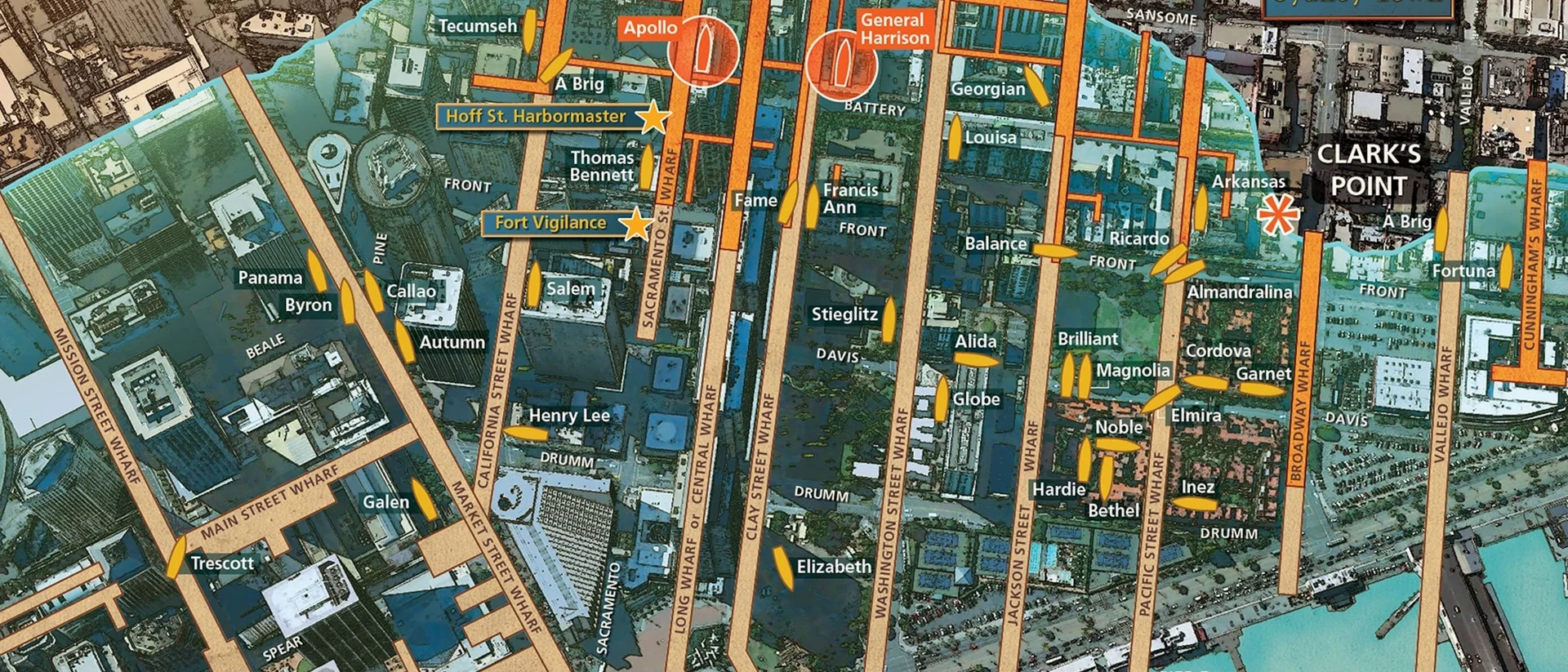
Historians and archaeologists have spent decades mapping what actually lies beneath San Francisco's Financial District. Researchers have documented more than 40 abandoned Gold Rush ships buried under the modern street grid, and maps built from old harbor charts put the true number as high as 70 or more.
The buried hulls sit in mud that is still saturated with seawater, with tides still moving beneath the pavement just as they did in 1849.
The Ship the Trains Run Through
One of those ships is the Rome, a vessel that was deliberately sunk around 1852 as part of a scheme to claim waterfront real estate. The wreck stayed buried and forgotten until the mid-1990s, when Muni crews digging a light rail tunnel toward Embarcadero Station hit its hull.
The ship was too large to remove, so engineers built the tunnel straight through its forward section instead. Since 1994, Muni Metro light rail trains, not BART, have passed directly through the Rome's hull every single day on the route toward Embarcadero.
A Second Ship Found Under a Hotel
The buried fleet keeps turning up. In September 2001, construction crews digging a foundation for a hotel at the corner of Battery and Clay Streets uncovered the General Harrison, a three-masted ship that had burned to the waterline and sunk in 1851.
Archaeologists were given months to excavate the site before construction could resume, carefully removing artifacts from the mud before the building went up on top of it.
Walking Over a Ghost Fleet
Modern San Francisco's office towers, cable cars, and sidewalks all sit on land that used to be open water. Somewhere beneath the Financial District, the hulls of dozens of Gold Rush-era ships are still down there, quietly holding up the city that buried them.
Enjoyed this? Get a new fact every morning.
A fascinating fact in your inbox every morning. Free. Unsubscribe anytime.
Frequently Asked Questions
How many ships are buried under San Francisco?
Why are there ships buried under San Francisco?
Do Muni trains really pass through a buried ship?
What is the General Harrison ship in San Francisco?
Is it BART or Muni that runs through the buried ship?
Verified Fact
Verified Jul 9, 2026 · 5 sources checked
Source: National GeographicShow verification details
Claims checked
- More than 40, possibly 70 or more, Gold Rush ships buried under the Financial District
- Crews abandoned ships in 1849 and streets were built over them
- Workers hit the Rome during a 1994 Muni tunnel dig
- Trains pass through the Rome's hull daily (Muni Metro, not BART)
- The General Harrison, excavated in 2001, was a 126-foot three-masted ship
Sources: National Geographic, SFMTA, KQED, foundsf.org, Museum of Underwater Archaeology