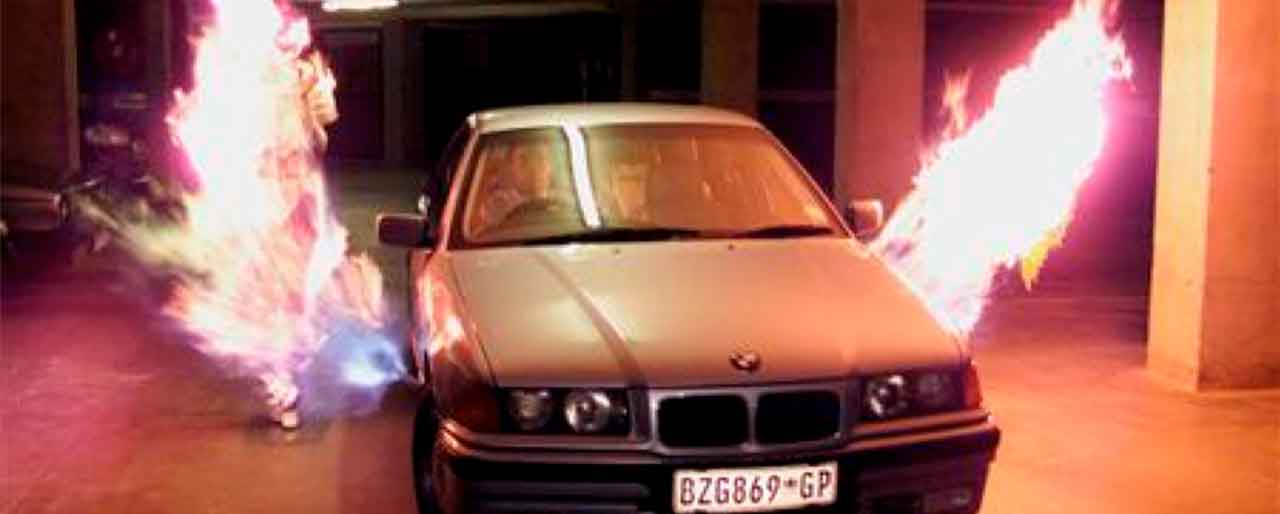
In the late 1990s, a South African inventor created the 'Blaster,' a car-mounted flamethrower designed to repel carjackers, which briefly became legal to sell due to a loophole in self-defense laws.
South Africa's Anti-Carjacking Flamethrower Was Real
When carjacking rates in South Africa reached crisis levels in the 1990s, one inventor decided that pepper spray and car alarms simply weren't dramatic enough. His solution? Mounting flamethrowers to the doors of your vehicle.
The device was called the Blaster, and yes, it was exactly as insane as it sounds.
Born from Desperation
Charl Fourie invented the Blaster in 1998, during a period when South Africa had one of the highest carjacking rates in the world. Johannesburg alone saw thousands of armed carjackings annually, many turning fatal. Drivers were being pulled from vehicles at gunpoint at traffic lights, in driveways, and even in parking garages.
Traditional security measures weren't cutting it. Fourie's answer was a liquefied petroleum gas system installed beneath the driver and passenger doors, activated by a foot pedal. When triggered, it shot flames outward in a fiery arc designed to engulf anyone standing beside the car.
How It Actually Worked
The system was surprisingly sophisticated for something so barbaric:
- Twin nozzles mounted under each door
- A foot-operated trigger near the clutch
- Flames reaching up to 5 meters (about 16 feet)
- Fueled by the same gas used in camping stoves
Fourie demonstrated it for media outlets, casually roasting a dummy attacker while explaining the activation process. The flames were hot enough to cause severe burns but—according to Fourie—unlikely to kill. "It would definitely blind them," he noted, as if that were the reassuring option.
The Legal Gray Zone
Here's where it gets interesting. South African law at the time allowed citizens broad latitude in self-defense, particularly when facing lethal threats. Since carjackers were often armed and frequently murdered their victims, Fourie argued the Blaster was a proportionate response.
The device was never explicitly legalized—it simply wasn't illegal. No law specifically prohibited mounting a flamethrower to your Volkswagen. Police and legal experts expressed concerns, but prosecuting someone for using it would require proving the force was unreasonable, which was difficult given the genuine danger of armed carjacking.
Around 25 units were reportedly sold at approximately 3,900 rand (about $650 at the time) before production ceased in the early 2000s.
Why It Disappeared
Despite the terrifying crime rates, the Blaster never caught on. The reasons were practical as much as ethical:
- Installation was complex and expensive
- Risk of accidentally incinerating pedestrians, children, or pets
- Fuel refills and maintenance concerns
- Insurance companies were not on board
The broader question—whether roasting criminals alive was an appropriate response to property crime—also made many South Africans uncomfortable. By 2001, the Blaster had largely vanished from the market.
A Symptom of Desperation
Looking back, the Blaster represents something darker than mere novelty. It was a product born from genuine terror, created in a society where the government seemed unable to protect citizens from violent crime. People were so frightened that car-mounted flamethrowers seemed like a reasonable purchase.
South Africa's carjacking rates have since declined, though the country still struggles with violent crime. The Blaster remains a bizarre footnote—a reminder of how fear can drive people toward solutions that seem insane from the outside but made a grim kind of sense to those living through it.
Frequently Asked Questions
Was the car flamethrower in South Africa real?
Was it legal to have a flamethrower on your car in South Africa?
How many car flamethrowers were sold in South Africa?
Why did South Africa have car flamethrowers?
Can you still buy the Blaster car flamethrower?
Verified Fact
This fact has been reviewed and verified against original sources.
Show verification details
Corrected to past tense - the Blaster was a real product from 1998-2001 but is no longer manufactured or legally sold. The claim about legality was always more nuanced than stated.