
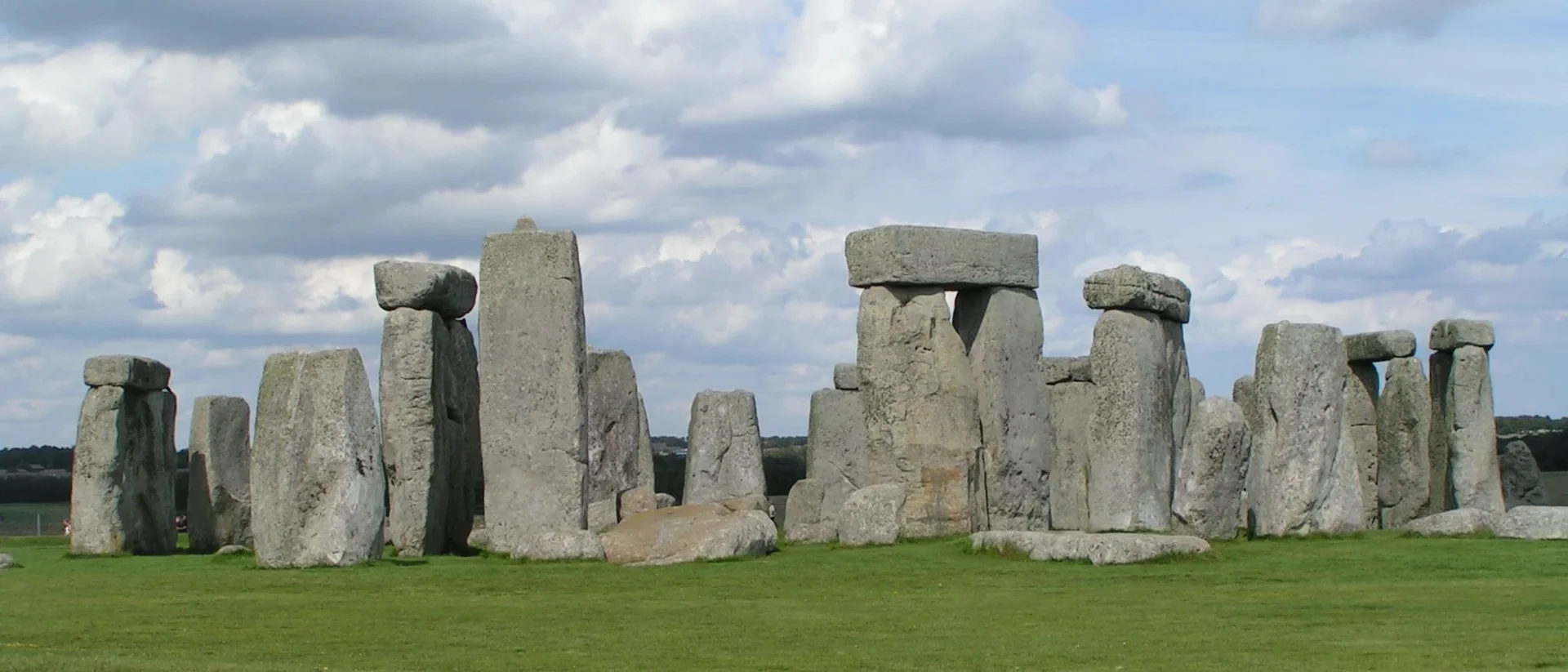
Stonehenge's central slab is the Altar Stone - a 6-tonne sandstone block. Scientists believed for a century it came from Wales. A study in Nature matched its mineral fingerprint to northeast Scotland, over 750 km away. That is the longest recorded stone haul of the Neolithic era. How Neolithic people moved it there remains unsolved - possibly by sea.
Stonehenge's Altar Stone Came From Scotland, Not Wales
It is one of the most studied monuments on Earth. Yet for over a century, scientists had the origin of Stonehenge's most central stone completely wrong.
The Stone in the Middle
The Altar Stone is a 6-tonne flat sandstone slab that lies at the heart of Stonehenge. It is larger and heavier than the surrounding bluestones, and has long stood apart as an anomaly - a different colour, a different texture, a different character entirely. For decades, researchers grouped it with the bluestones from the Preseli Hills in Pembrokeshire, Wales, and assumed it had come from a Welsh source roughly 225 km away. That assumption went largely unchallenged for more than a century.
A Mineral Fingerprint Points North
In August 2024, a research team published a study in the journal Nature that overturned that assumption entirely. Because chipping away material from Stonehenge is not permitted, the scientists worked with fragments preserved from earlier excavations - some dating to digs in the 1840s. They analyzed three distinct types of mineral grain within the sandstone: their ages, chemical compositions, and physical properties.
Each test produced the same result. The mineral fingerprint matched the Orcadian Basin - a geological formation in northeast Scotland, stretching across the Scottish mainland toward the Orkney Islands. Not a single Welsh rock sample matched the stone. The Altar Stone had come from more than 750 km (466 miles) away.
A 6-Tonne Stone, 750 km From Home
Moving a block that size - roughly the weight of a large lorry - in the Neolithic period is a logistical challenge that still has no confirmed answer. The stone was most likely placed during the second main phase of Stonehenge's construction, around 2620 to 2480 BCE. People at that time had no wheeled vehicles, no iron tools, and no written record of what they were doing.
Researchers believe the most likely route was by sea: loaded onto rafts or boats, carried along the Scottish coast and around the tip of Wales, then up through southwest England by river before the final overland drag. Glacial transport - the idea that ice sheets may have moved the stone naturally - has been considered but is judged implausible for this specific stone. The conclusion is that people moved it deliberately, over an extraordinary distance.
The Longest Recorded Neolithic Stone Haul
The authors note that the Altar Stone's journey is the longest recorded haul of any stone used in a Neolithic monument - exceeding even the bluestones transported from Wales. The finding suggests that communities across prehistoric Britain were far more connected than previously understood: people, ideas, and apparently 6-tonne sandstone slabs were moving across the island in ways that challenge older ideas about prehistoric isolation.
The study was a collaboration between researchers at Aberystwyth University, UCL, and Curtin University in Australia. It was published in Nature on 14 August 2024.
Frequently Asked Questions
Where did Stonehenge's Altar Stone come from?
What is the Altar Stone at Stonehenge?
How did Neolithic people transport the Altar Stone to Stonehenge?
When was the Altar Stone placed at Stonehenge?
How did scientists determine where the Altar Stone came from?
Verified Fact
Verified Jun 29, 2026 · 2 sources checked
Source: NatureShow verification details
Claims checked
- Altar Stone came from northeast Scotland, not Wales
- Stone traveled at least 750 km, a Neolithic record
- Stone weighs 6 tonnes; moved by sea remains unsolved
- Welsh rock samples showed no match
- Third analysis method corrected to isotopic signature
Sources: Nature, UCL