Jupiter emits powerful radio bursts that amateur astronomers can detect with a simple shortwave radio antenna, making it one of the few planets you can 'listen' to from Earth.
You Can Listen to Jupiter's Radio Storms from Your Backyard
Right now, as you read this, Jupiter is screaming into space. Not with sound—there's no air in the void to carry it—but with radio waves so powerful they travel 365 million miles to reach Earth. And with the right equipment, you can hear them.
This isn't science fiction. Amateur astronomers around the world routinely pick up Jupiter's radio emissions using antennas they built in their backyards. The planet sounds like ocean waves crashing on a shore, mixed with popping static and eerie whistles.
What Makes Jupiter So Loud?
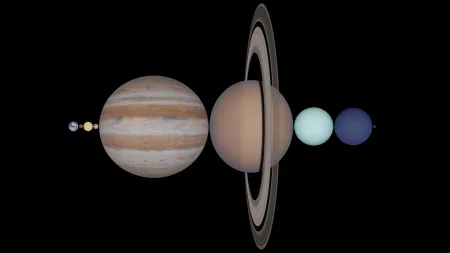
Jupiter has the strongest magnetic field of any planet in our solar system—20,000 times more powerful than Earth's. This creates a massive magnetosphere that traps charged particles from the solar wind and from Io, Jupiter's volcanic moon.
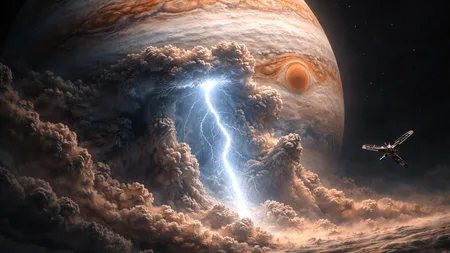
When these particles spiral along magnetic field lines and slam into Jupiter's upper atmosphere, they release bursts of radio energy at frequencies between 10 and 40 MHz. These are called decametric emissions, and they're some of the most powerful natural radio signals in the solar system after the Sun.
Your DIY Jupiter Receiver
Here's where it gets fun. You don't need a radio telescope or expensive equipment. NASA actually provides free blueprints for building a "Radio Jove" receiver—a simple shortwave antenna that costs around $100 in parts.
The basic setup includes:
- A dipole antenna (two aluminum poles, about 20 feet long total)
- A shortwave receiver tuned to 20.1 MHz
- Coaxial cable to connect them
That's it. String up the antenna, point it at Jupiter, and wait. The best times to listen are when Io passes behind Jupiter, which triggers the strongest radio storms.
What Does a Planet Sound Like?
Jupiter's radio emissions fall into two categories. L-bursts (long bursts) last one to several seconds and sound like ocean waves—a rhythmic swooshing that rises and falls. S-bursts (short bursts) are rapid-fire pops and crackles, sometimes thousands per second, like bacon frying in a cosmic pan.
The experience is surprisingly moving. You're not looking at data or images processed by computers. You're hearing electromagnetic radiation that left Jupiter's atmosphere and traveled through 365 million miles of space to vibrate your antenna. It's direct contact with another world.
A Radio Station Since 1955
Scientists discovered Jupiter's radio emissions by accident in 1955 when Bernard Burke and Kenneth Franklin were testing a radio antenna in Maryland. They kept picking up interference that seemed to move across the sky—until they realized it was moving with Jupiter.
Since then, Jupiter's radio storms have helped scientists study the planet's magnetic field, track its rotation rate, and even predict volcanic eruptions on Io. When Io is particularly active, Jupiter gets louder.
Today, thousands of amateur radio astronomers participate in NASA's Radio Jove project, submitting their recordings to a global database. It's citizen science at its most accessible—all you need is an antenna, some patience, and a clear view of the night sky.
The universe is broadcasting. Jupiter's just the loudest station on the dial.
Frequently Asked Questions
Can you really hear Jupiter from Earth?
What frequency are Jupiter's radio emissions?
How do you build a Jupiter radio receiver?
Why does Jupiter emit radio waves?
When is the best time to hear Jupiter's radio storms?
Verified Fact
This fact has been reviewed and verified against original sources.
Show verification details
Clarified that it requires a shortwave radio (not AM) and specific equipment setup. Jupiter emits decametric radio waves, not AM broadcast frequencies.
Related Topics
More from Science & Space
View all Science & Space →