
⚠️This fact has been debunked
Our fact-checkers found this claim to be inaccurate. See the article below for details.
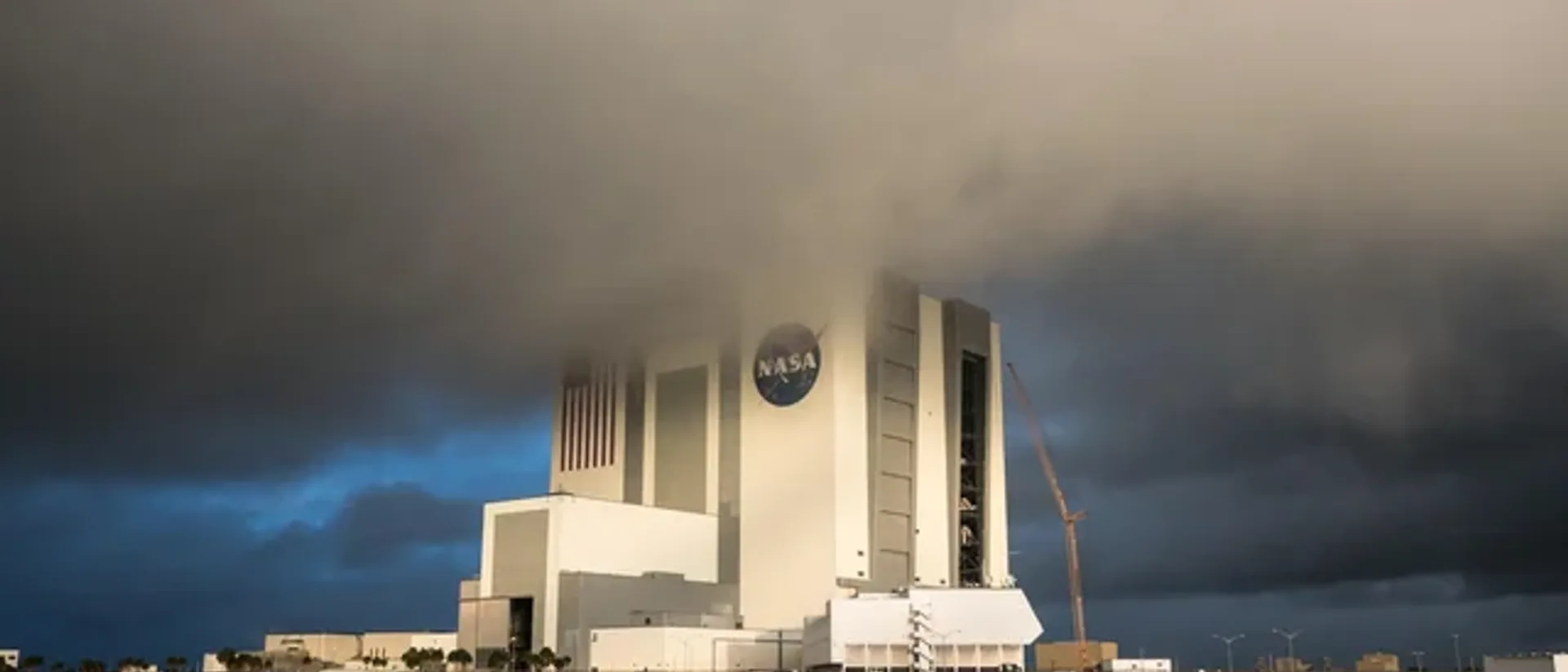
NASA's Vehicle Assembly Building is so massive that it supposedly creates its own weather—but NASA says that's actually a myth.
The $1 Million Space Pen & The Pencil That Never Was
You've probably heard this one before: NASA's Vehicle Assembly Building is so enormous that rain clouds form inside on humid days. It's been shared millions of times, appeared in countless "amazing facts" lists, and sounds completely plausible given the building's incredible size.
There's just one problem: NASA says it's not true.
What NASA Actually Says
According to NASA's official statement: "Contrary to popular stories circulated during construction, the VAB, which is mostly not air conditioned, does not create its own weather – reports of indoor rain, clouds, or fog are myths."
Jose Perez Morales, NASA's senior project manager for the VAB, explained: "Because of the massive amount of steel and volume of the building, temperatures inside the VAB can fluctuate from very cold to very hot depending on the outside weather."
Where the Myth Came From
The legend likely started because fog can enter through the building's massive doors when they're opened. Florida's humid climate means this fog can linger inside the cavernous space, leading observers to assume it formed internally. The doors themselves are 456 feet high—the largest in the world—so there's plenty of room for weather to wander in.
The Building Is Still Incredible
Even without indoor rain, the VAB remains one of humanity's most impressive structures:
- 525 feet tall – The Statue of Liberty could stand inside with room to spare
- 130 million cubic feet of interior space
- 8 acres of floor space
- One of the largest buildings by volume in the world
- Home to the assembly of every Saturn V, Space Shuttle, and now the Artemis rockets
The building does have a massive 10,000-ton air conditioning system—but it's for moisture control to protect sensitive spacecraft components, not to prevent indoor rainstorms.
Why Myths Like This Spread
This myth persists because it feels true. The VAB is genuinely enormous, and the idea of a man-made structure creating its own weather captures our imagination. It's a reminder to always check the source—even when a fact seems too cool to question.
Enjoyed this? Get a new fact every morning.
A fascinating fact in your inbox every morning. Free. Unsubscribe anytime.