Holless Wilbur Allen ran a small archery shop in Missouri. In 1966 he grabbed a hacksaw, sawed the ends off a recurve bow and bolted a pulley onto each limb. He patented it in 1969, the first compound bow. The Smithsonian keeps his patent model. More than 1.2 million students a year now learn archery on a compound bow like his, in schools across all 50 states. Bowhunters still draw one every fall.
He Sawed His Bow in Half and Invented the Compound Bow
Holless Wilbur Allen ran a small archery shop in Missouri, and in 1966 he did something no other bowyer had tried. He grabbed a hacksaw and cut the ends off his own recurve bow.
A Bow Cut in Half
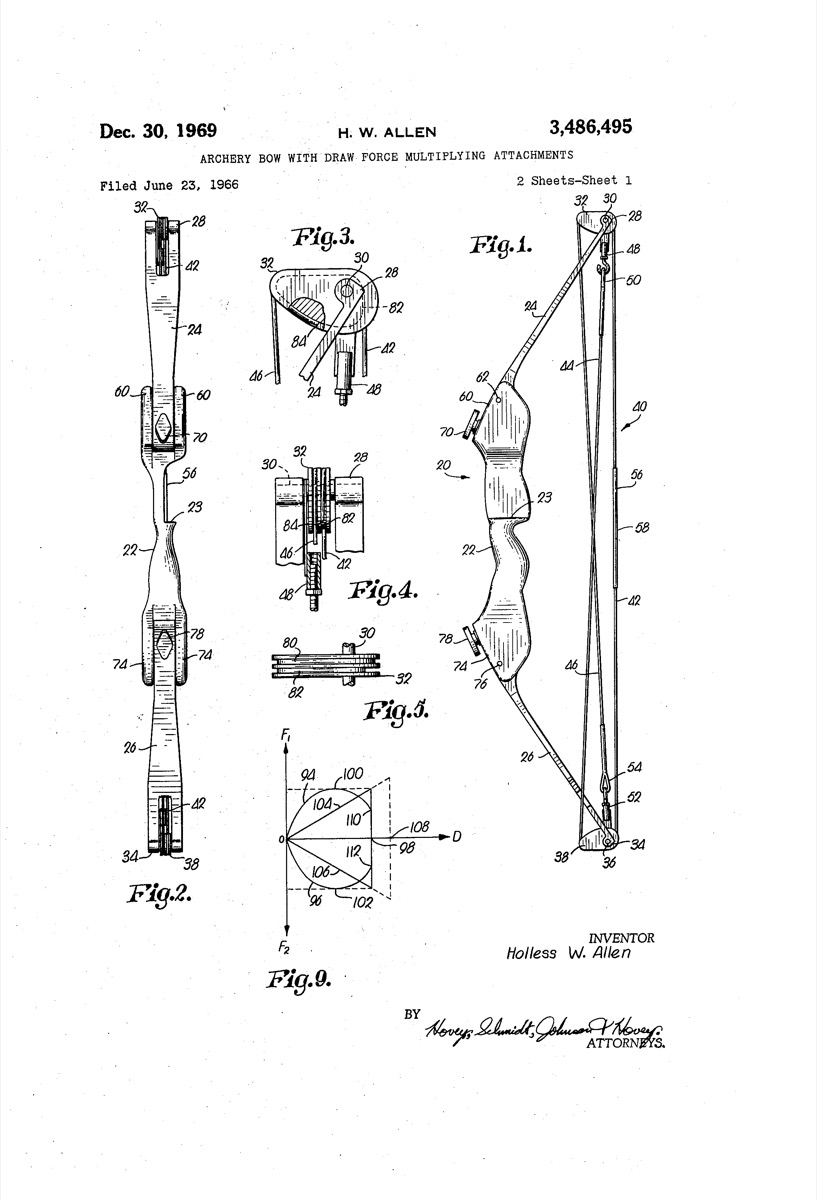
Allen sawed the tips off each limb and bolted a pulley onto the stub. The string no longer ran straight from tip to tip. It now wrapped around the wheels.
He was a longtime bowhunter who had grown frustrated watching deer duck out of the way of his arrows. He wanted a bow that stored more energy in the limbs, without making the shot any harder to hold at full draw.
The Patent Office Agreed
Allen filed for a patent on June 23, 1966. The application described eccentric pulleys mounted on the limb tips, built to multiply the draw force early in the pull and ease off as the archer reached full draw.
The patent, US 3,486,495, was granted on December 30, 1969. It covered the first compound bow.
The Smithsonian's National Museum of American History now holds Allen's original patent model in its permanent collection.
From a Hunting Camp to Gym Class
Allen licensed his design to five manufacturers. Only Precision Shooting Equipment still makes bows today, but every current compound bow uses some version of the eccentric-pulley idea he patented.
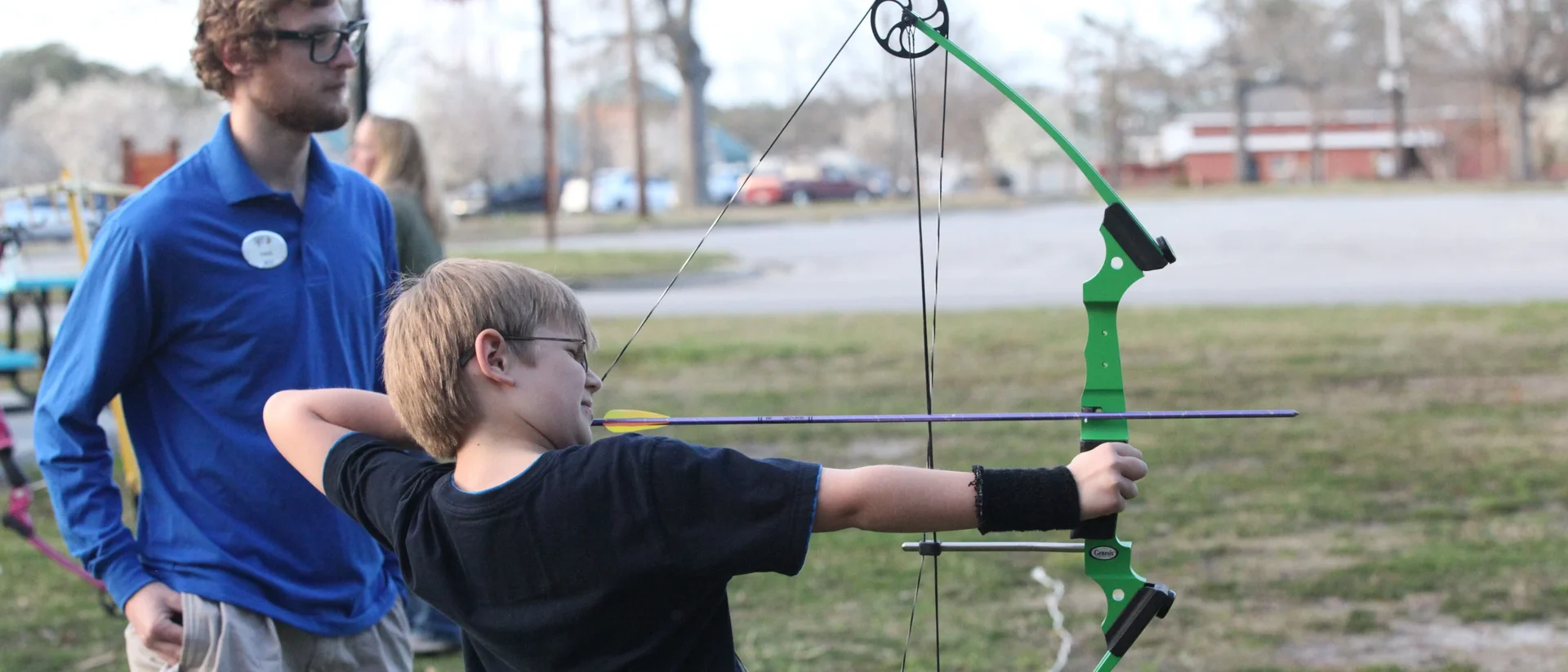
In 2002, the National Archery in the Schools Program launched in 21 middle schools in Kentucky. Organizers wanted one bow every student could shoot fairly, whatever their size or strength, so they picked a compound bow called the Genesis. At the time, it was the only model on the market with a universal draw length.
The program grew far beyond Kentucky. According to NASP's 2026 announcement, more than 1.2 million students a year now learn archery on that same style of bow, in schools across all 50 states and several countries abroad.
The Idea Nobody Credits
Bowhunters still climb into tree stands every fall pulling back a compound bow. Middle schoolers still line up in gyms and cafeterias to do the same thing.
Almost none of them know the name of the Missouri bowyer who took a hacksaw to his own equipment and changed how the whole sport works.
Frequently Asked Questions
Who invented the compound bow?
When was the compound bow patented?
Why does the National Archery in the Schools Program use the Genesis bow?
How many students take part in the National Archery in the Schools Program?
Where is Holless Wilbur Allen's original patent model kept?
Verified Fact
Verified Sep 11, 2026 · 5 sources checked
Source: Google Patents (US Patent 3,486,495)Show verification details
Claims checked
- Holless Wilbur Allen, a Missouri bowyer, sawed the ends off a recurve bow and bolted a pulley onto each limb in 1966
- He patented it, US Patent 3,486,495, filed June 23 1966 and granted December 30 1969, the first compound bow
- The Smithsonian holds his original patent model
- NASP adopted the Genesis bow in 2002 as the only universal draw length bow available
- NASP launched in 21 Kentucky schools in 2002 and now reaches over 1.2 million students a year in all 50 states, per its March 2026 release
Sources: Google Patents, Smithsonian, National Archery in the Schools Program, Wikipedia
Related Topics
More from Technology & Innovation
View all Technology & Innovation →