
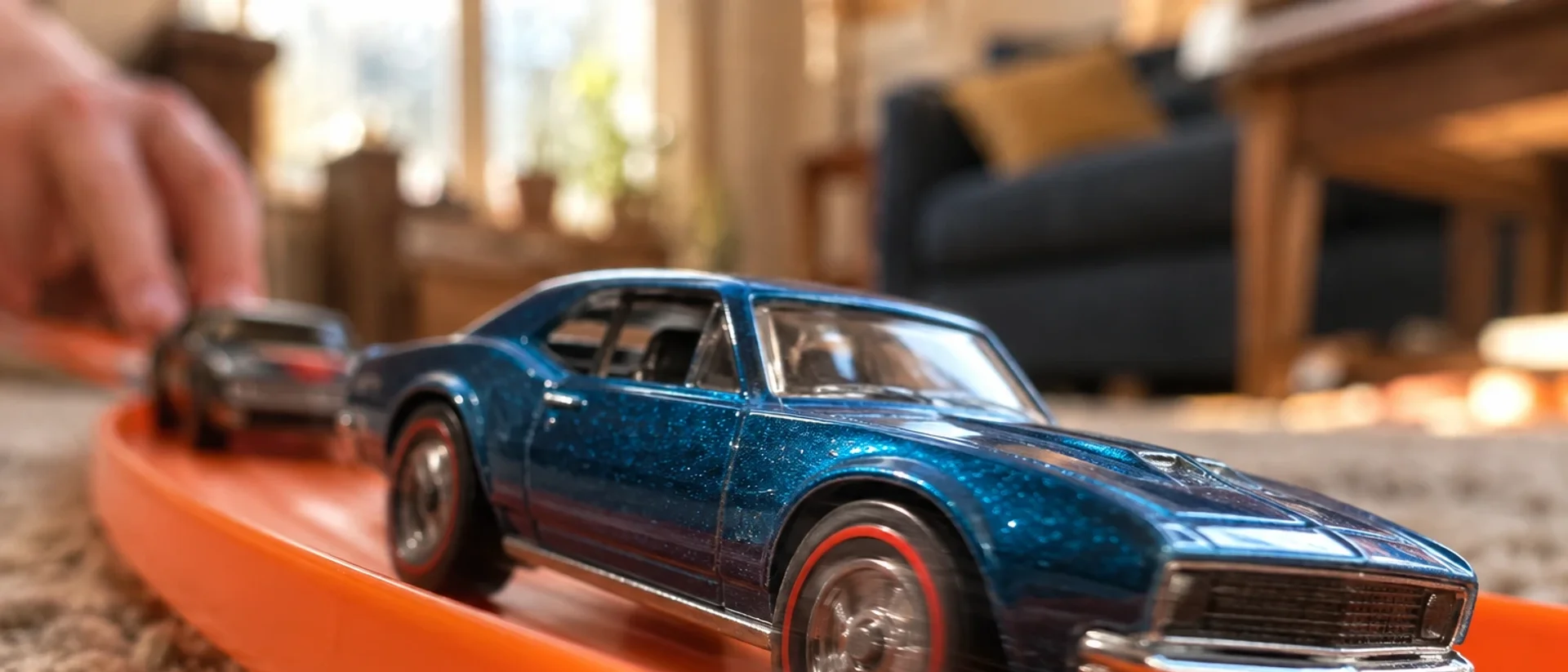
Hot Wheels came out in 1968 built to outrun every other toy car. Mattel handed the problem to its head of research. He had come from Raytheon, where he worked on the Sparrow and Hawk missiles. The fix was a thin music-wire axle spinning in low-friction plastic bearings. Rival Matchbox cars were still rolling on nail axles. Mattel still makes 22.5 Hot Wheels a second.
The Missile Engineer Who Made Hot Wheels Fast
In the spring of 1968 Mattel put sixteen small die-cast cars on a strip of orange plastic track, and every other toy car in America suddenly looked slow. The reason was not the paint or the flake-finish bodies. It was the axle.
A Toy Car Problem, Handed to a Missile Man
Mattel co-founder Elliot Handler had been watching his children push little British die-cast cars around the floor, and he wanted something better. The brief was blunt: build a toy car that beats everything else down a track.
The problem landed in the research department, which was run by an engineer named Jack Ryan.
Ryan took an engineering degree at Yale in 1948 and spent his early career at Raytheon, working on missiles. His obituary credits him with designing the Sparrow and the Hawk there; other accounts say he helped design them. Either way, he moved into toys in 1955.
At Mattel he served as vice president of research and design. He is credited with the technology behind about 35 of the country's best-selling toys, the Chatty Cathy talking doll and Barbie among them, and he held more than 1,000 patents on inventions around the world.
Popular Science, writing about the Hot Wheels design center decades later, said Handler hired "Jack Ryan, an engineer who had previously worked on guided missile systems" along with Harry Bentley Bradley, a car designer poached from General Motors, and gave them a simple task: design a better toy car.
The Trick Was a Piece of Wire
The cars Hot Wheels had to beat rolled on nail axles - thick, blunt, and far too fat to spin quickly under heavy metal wheels.
The Hot Wheels answer went the other way. The axle was a length of music wire: thin, springy, polished steel of the sort wound into instrument strings, mounted so the outboard ends could flex and give the car a kind of suspension.
Around that wire sat a small bearing molded from Delrin, the slick acetal plastic DuPont had brought to market around 1960.
The axles are often called piano wire. Hagerty reports that the earliest prototypes actually ran on guitar strings, left over from a child's guitar Mattel had designed and then cancelled on cost.
A thin, polished shaft turning inside a low-friction bearing is aerospace thinking in miniature, and on a length of orange track the difference was not subtle. The cars ran farther and far faster than anything on the shelf beside them. Mattel sold them under the tagline "the fastest metal cars in the world".
The engineering was a department, not one man. The patent for the vehicle-and-track system names Harvey La Branche, Mattel's director of product development engineering, as lead inventor, with Howard Newman alongside him.
Where the Name Came From
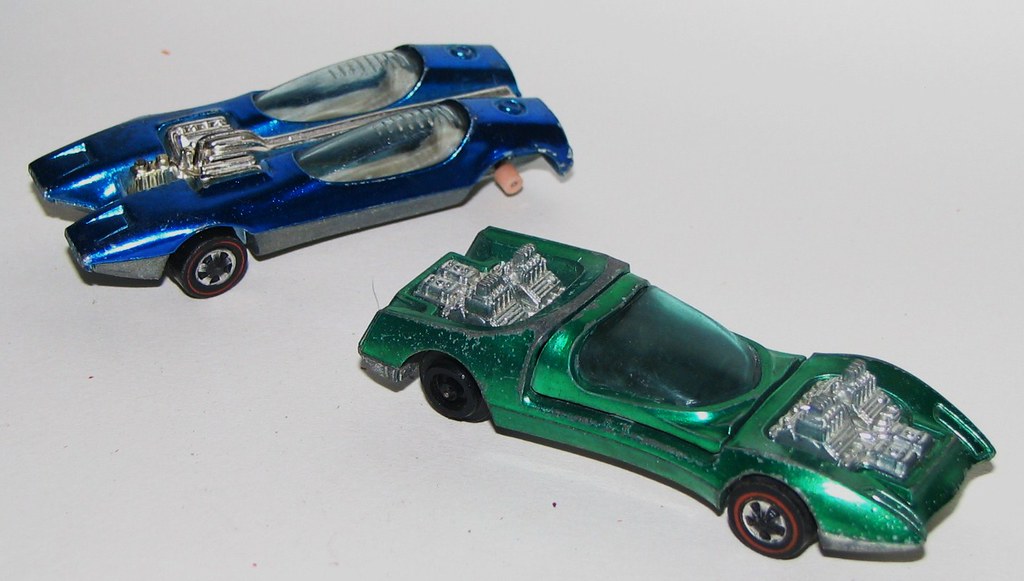
There is no settled account of who first said the two words that became the brand name. Three different stories survive.
In the telling that gets repeated most often, Elliot Handler watched one of the prototypes run along the floor and said: "Those are some hot wheels!"
Hagerty tells it differently. Someone in the Mattel parking lot admired the wheels on Harry Bentley Bradley's customised El Camino and said much the same thing to him. A third version credits a prototype belonging to designer Fred Adickes. Before any of them, the project's working name was Big Wheels.
The date is not in dispute. The first car went on sale on May 18, 1968, a Custom Camaro. Sixteen models made up that opening run, and collectors still call them the Sweet 16.
Twenty-Two and a Half a Second
Matchbox and the rest of the die-cast trade had to redesign around what Mattel had done, and the orange track became the standard against which a toy car was judged.
The brand never slowed down. Roberto Stanichi, who runs Hot Wheels at Mattel, told the Washington Post in 2024 that the company makes and sells 22.5 Hot Wheels a second - roughly 709 million cars a year.
About a third of that money now comes from adult collectors rather than children.
Ryan fell out with Mattel over royalties on his designs and left, working afterwards as a consultant and inventor. He died in 1991 at the age of 65. The obituaries led with Barbie. The cars he was told to make fast are still coming off the line.
Enjoyed this? Get a new fact every morning.
A fascinating fact in your inbox every morning. Free. Unsubscribe anytime.
Frequently Asked Questions
Who designed the first Hot Wheels cars?
Why were Hot Wheels faster than Matchbox cars?
When did Hot Wheels come out?
How many Hot Wheels cars does Mattel make?
What is Delrin and why did Hot Wheels use it?
Verified Fact
Verified Sep 12, 2026 · 7 sources checked
Source: Los Angeles TimesShow verification details
Claims checked
- Jack Ryan came to Mattel from Raytheon, where he worked on the Sparrow and Hawk
- Hot Wheels launched in 1968, the first car a Custom Camaro sold on May 18
- The cars ran on a thin music-wire axle in low-friction Delrin bearings; rivals used nail axles
- Axle corrected to music wire (was piano wire)
- Axle patent credit corrected to Mattel's Harvey La Branche and Howard Newman (not Ryan alone)
- Mattel makes and sells 22.5 Hot Wheels a second, about 709 million a year
Sources: Los Angeles Times, Washington Post, Popular Science, Hagerty, Antique Trader, AutoGuide, US Patent Office