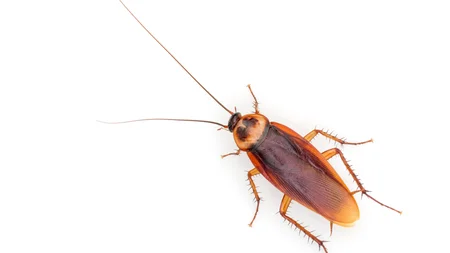
There's a phone app called RoboRoach that allows you to remotely control a cockroach through a chip that you to manually implant into the unwitting critter.
The RoboRoach App Lets You Remote-Control Real Cockroaches
Yes, you read that correctly. There's a commercially available kit that transforms an ordinary cockroach into a smartphone-controlled cyborg. The RoboRoach, created by educational neuroscience company Backyard Brains, puts the power of neural engineering literally in the palm of your hand—and on the back of an unfortunate insect.
How to Build Your Own Cyborg Insect
The process is surprisingly hands-on. After purchasing the kit (which costs around $100), you receive a tiny circuit board backpack weighing just 4.4 grams, electrodes, and detailed instructions for the "surgery." You'll need to catch your own cockroach, though—preferably a large tropical species like a Madagascar hissing cockroach or discoid roach.
The implantation involves anesthetizing the roach with ice water, carefully sanding a small spot on its shell, supergluing the circuit board backpack onto its thorax, and threading wire electrodes into the roach's antenna sockets. The electrodes connect directly to the antenna nerves, which cockroaches use for navigation and sensing obstacles.
The Science Behind Remote-Controlled Bugs
The technology mirrors real medical devices used in humans. When you tap "left" or "right" on the smartphone app, it sends a Bluetooth signal to the backpack, which delivers brief electrical pulses to the corresponding antenna nerve. The roach's brain interprets this as bumping into a wall on that side, causing it to turn away—effectively steering it in the opposite direction.
This same principle of neural microstimulation powers cochlear implants that restore hearing and deep-brain stimulation therapies for Parkinson's disease. Backyard Brains designed the RoboRoach as an educational tool to make neuroscience tangible for students.
Controversy and Limitations
Unsurprisingly, animal rights groups like PETA have protested the product, arguing it trivializes animal experimentation. The company counters that insects lack the brain structures associated with suffering in mammals, and that understanding neural interfaces requires hands-on experience.
The "control" is also far from perfect. The roaches quickly habituate to the stimulation—within minutes, they start ignoring the signals as their nervous system adapts. You're not so much piloting a living drone as briefly influencing a creature that has its own agenda. The effect works best immediately after implantation and diminishes rapidly with repeated use.
Despite its limitations, the RoboRoach represents a genuinely novel intersection of biology, technology, and education. It's part science experiment, part ethical thought exercise, and entirely weird. The kit remains available through Backyard Brains' website and scientific retailers as of 2025, continuing to spark both fascination and debate about where the line between education and exploitation should be drawn.
Frequently Asked Questions
Is the RoboRoach app real?
How does the RoboRoach work?
Is controlling cockroaches with RoboRoach cruel?
Can you permanently control a cockroach with RoboRoach?
Where can I buy a RoboRoach kit?
Verified Fact
This fact has been reviewed and verified against original sources.
Show verification details
The RoboRoach is a real educational neuroscience product by Backyard Brains, originally launched via Kickstarter in 2013. It remains available for purchase as of 2025 through their website and scientific retailers like VWR.
Related Topics
More from Technology & Innovation
View all Technology & Innovation →