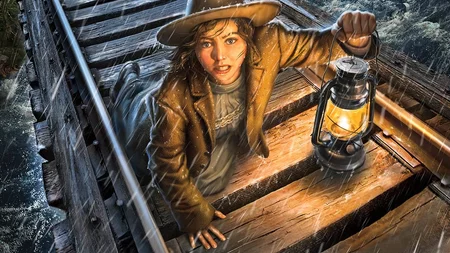
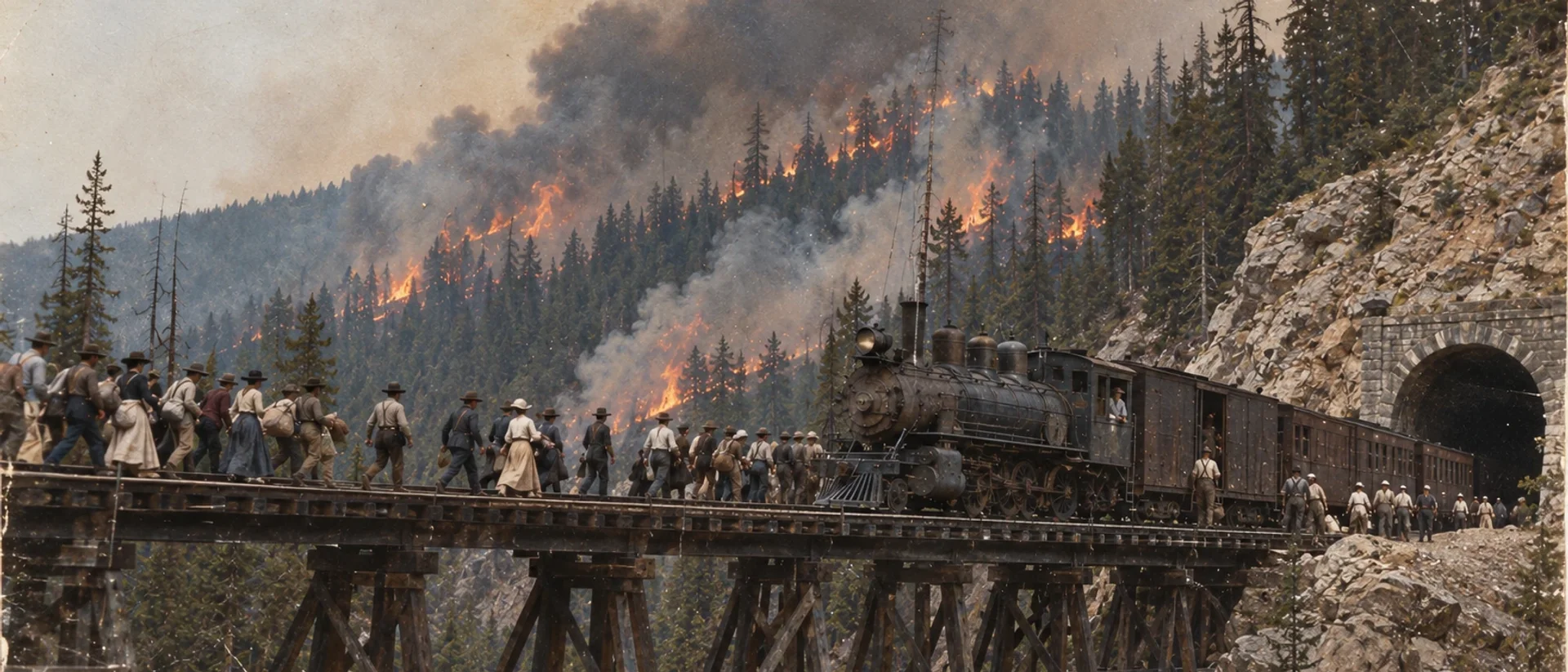
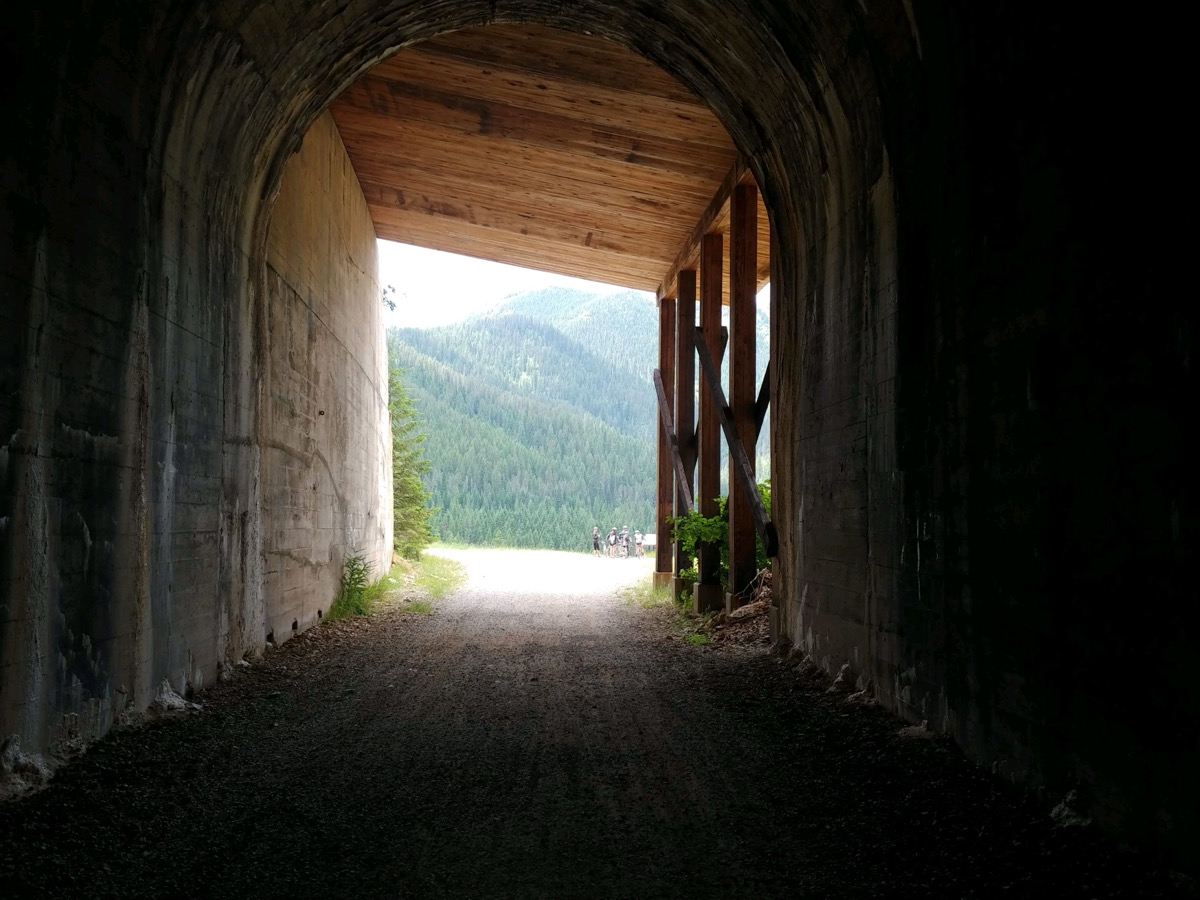
Hundreds of people survived a 1910 wildfire by sheltering inside railway tunnels. As the Big Burn swept Idaho and Montana that August, Milwaukee Road crews used trains to gather people trapped by the flames, and some crossed burning trestles to reach the tunnels. Part of the old line is now the Route of the Hiawatha, where cyclists ride through the mountains.
The Trains That Outran the Big Burn
In August 1910, a wildfire later called the Big Burn tore across northern Idaho and western Montana, and the Milwaukee Road railroad became a lifeline. Its crews loaded trapped people onto trains and ran them through the flames toward the mountain tunnels along the line.
Two Days, Millions of Acres
The fire struck on August 20 and 21, 1910. The U.S. Forest Service puts it at roughly three million acres burned in about two days, though acreage figures vary by source.
The Milwaukee Road had finished its line across the Bitterroot Mountains only a year earlier. Work camps and small towns such as Avery sat right along the new track.
Across a Wall of Flame
Several separate trains ran rescue trips that day, and their stories differ. One engineer, Johnnie Mackedon, drove a train from Falcon to Avery. "All that you could see of a bridge was a wall of flame, but we crossed it," he said.
Another train, a fire-duty train, picked up about 167 people. When it reached Tunnel 27, only 470 feet long, the crew had no choice but to stay there.
A third, a work train from Taft, Montana, steamed into the big Taft Tunnel, where it found refuge from the heat and flames. It collected nearly 400 workers, then about 47 more. When the bridges behind it collapsed, the only hope was a smaller tunnel, Tunnel 22, but a burning trestle stood in the way.
The engineer opened the throttle and screamed over the trestle. It held, and the train steamed into the tunnel, where everyone rode out the rest of the firestorm.
How Many Were Saved
No one has a single exact count. The trail's own history signs say that reportedly over 600 lives were saved by railroad employees who drove engines and box cars filled with people through the flames to the safety of the longer tunnels. The Spokesman-Review's account of individual trains describes hundreds of people across separate runs. Hundreds is the safe summary.
The Old Line Today
The Milwaukee Road gave up much of its western line by 1980, and the trains stopped. The tunnels and trestles stayed. Part of that line is now the Route of the Hiawatha, a rail-trail with 10 tunnels and seven high trestles.
The trail's highlight is the St. Paul Pass tunnel, also called the Taft Tunnel, which runs 1.7 miles under the Idaho-Montana line. It is the same Taft Tunnel where the work train from Taft took refuge. The Spokesman-Review does not say whether Tunnels 22 and 27 lie on the trail, so this article does not claim it.
Source:The Spokesman-Review
Enjoyed this fact?
Be the first to love this
Get a new fact every morning.
A fascinating fact in your inbox every morning. Free. Unsubscribe anytime.
Frequently Asked Questions
What was the Big Burn of 1910?
How did trains save people during the 1910 fire?
How many people were saved in the railroad tunnels?
Is the Taft Tunnel part of the Route of the Hiawatha?
Verified Fact
Verified Oct 17, 2026 · 3 sources checked
Source: The Spokesman-ReviewShow verification details
Claims checked
- The Big Burn burned about three million acres across northern Idaho and western Montana in two days, August 20-21, 1910
- Milwaukee Road crews ran separate rescue trains; one crossed a burning bridge, one stopped in Tunnel 27 with about 167 people, a work train from Taft took refuge in the Taft Tunnel
- The Taft train later crossed a burning trestle into Tunnel 22 after about 400 workers and 47 more were aboard
- The tunnels saved hundreds of lives
- The Taft (St. Paul Pass) Tunnel is 1.7 miles long and part of the Route of the Hiawatha
Sources: Spokesman-Review, U.S. Forest Service, Route of the Hiawatha trail history signs
Related Topics
More from History & Culture
View all History & Culture →