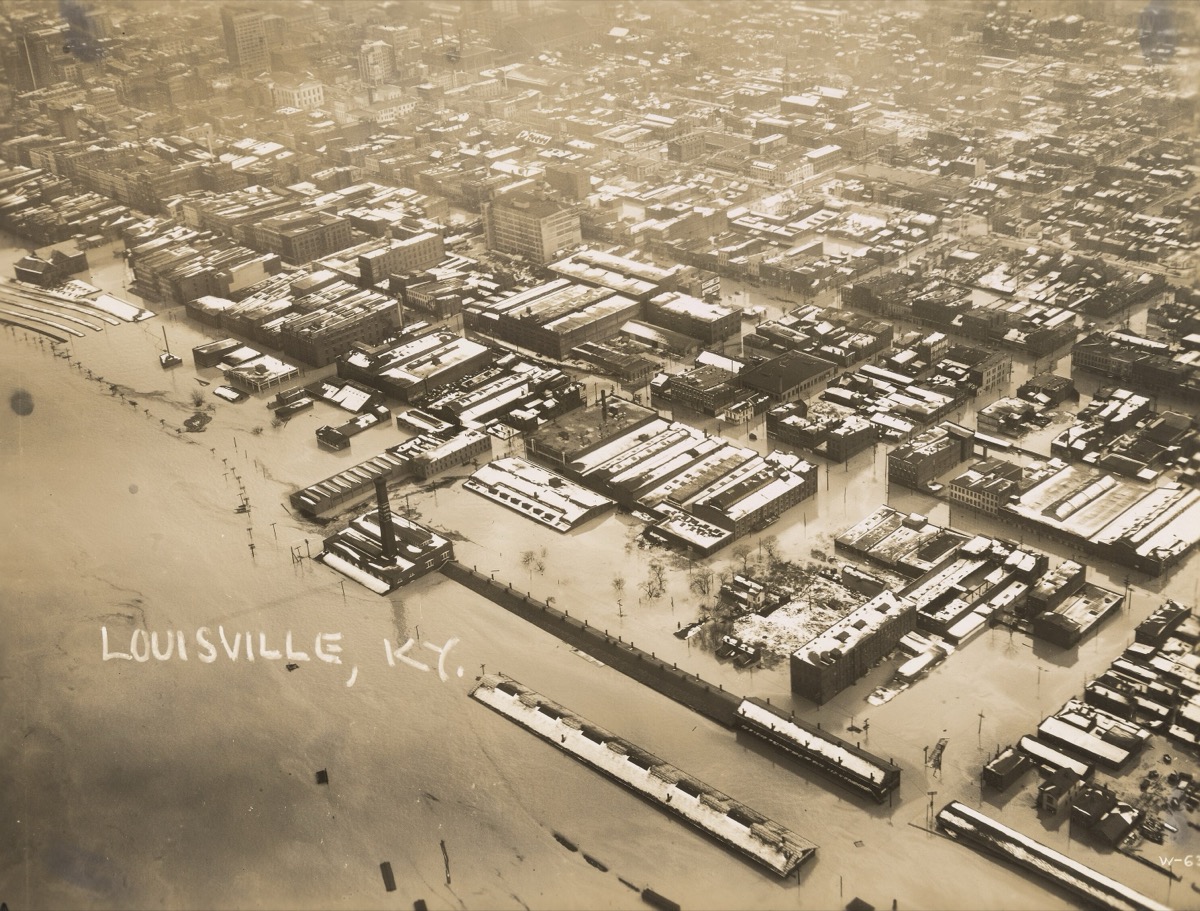
Floodwater covered most of Louisville, Kentucky, in January 1937, and there were not enough boats to rescue everyone downtown. In less than a day, a crew built a floating bridge about 1,800 feet long on empty whiskey barrels. An estimated 75,000 people walked across it to safety over the next four days.
The Bridge Louisville Built From Whiskey Barrels
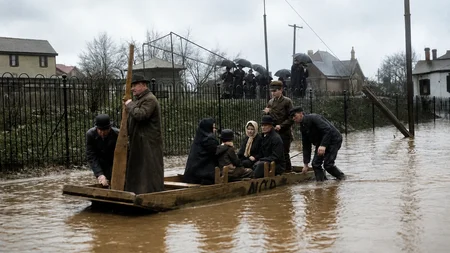
Floodwater covered most of Louisville, Kentucky, in January 1937, and WDRB reported in a look back at the flood that there were not enough boats to rescue everyone downtown. The answer was a bridge built on empty whiskey barrels that floated about 1,800 feet from East Jefferson Street toward the drier ground of the Highlands.
Water Everywhere
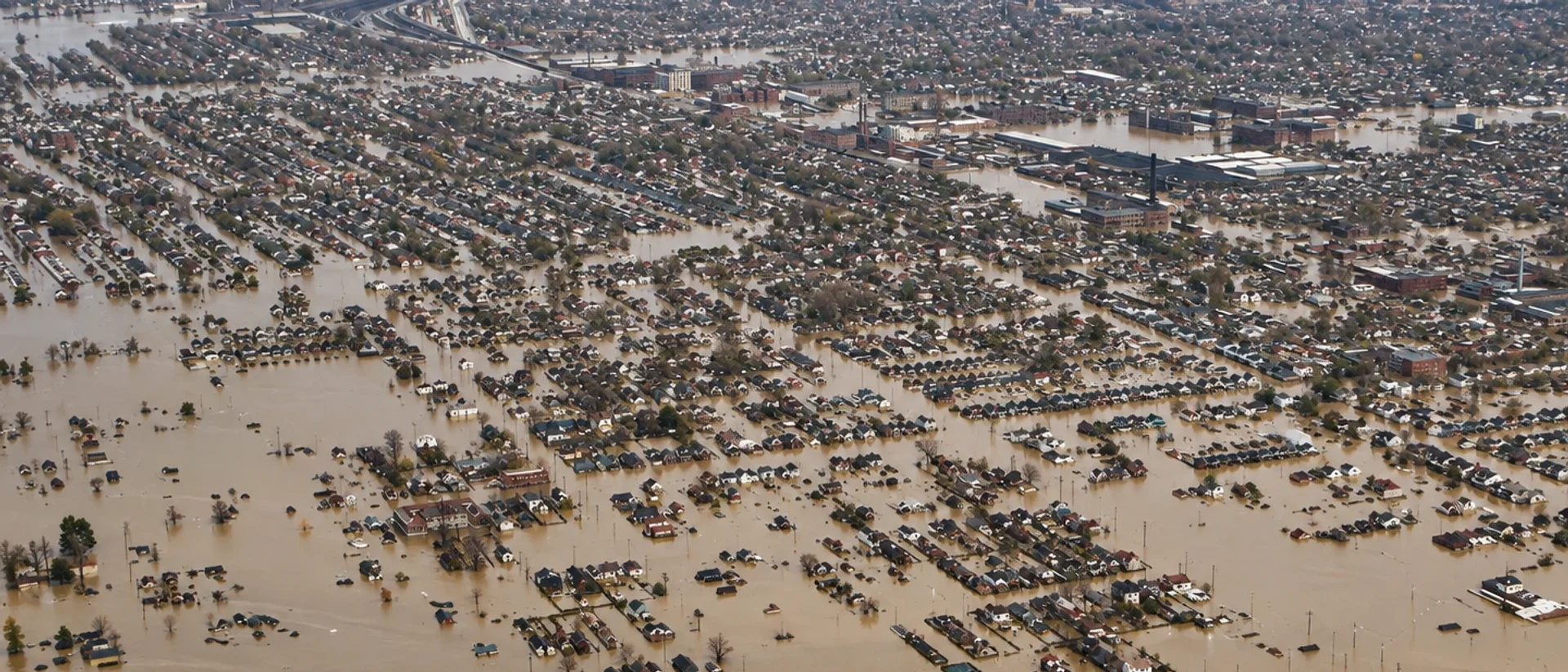
The Ohio River crested at Louisville on January 27, 1937. The National Weather Service says 70 percent of the city was submerged and 175,000 residents were forced to flee. Other accounts put the flooded share nearer 60 percent.
A Bridge on Empty Barrels
On January 26, a floating bridge went up. One local timeline says work started at 9am and finished at 6pm, about nine hours. A WDRB retrospective says it took 23 hours. WFPL's account says only "less than a day," and that is the claim that fits both.
The bridge ran about 1,800 feet from the corner of Johnson and Jefferson streets to the foot of Baxter Avenue, and it floated on empty whiskey barrels. That length is the figure in most local accounts; we found no contemporary measurement.
At the far end, the bridge let thousands of refugees cross the floodwater into the Highlands and Crescent Hill.
Who Built It
The Filson Historical Society's finding aid for the papers of Louisville architect William Arrasmith says he led a team in the creation of his design for the pontoon bridge during the flood. Arrasmith is better known for his Art Deco Greyhound bus stations, and his photograph collection at the Filson holds two pictures of the bridge.
Other accounts are looser. A student newspaper says citizens built it, and a man in a steamboat forum recalled that his brother helped build the "whiskey-barrel" bridge.
Tens of Thousands Walked Out
Louisville author Rick Bell, quoted by WDRB, says about 75,000 people crossed the bridge to safety in four days. That is an estimate, and we found no contemporary count.
Another crowd figure comes from the neighborhood of Irish Hill, where the bridge landed along Baxter at Lexington Road. Over 20,000 people passed through Irish Hill on their way to the Highlands or Crescent Hill, and neighbors gave them food, water and temporary shelter.
A local timeline says that by January 30 a pontoon bridge at Beargrass Creek was being used for emergency traffic only. For a few days, whiskey barrels had been the road out of a flooded city.
Source:WDRB
Enjoyed this fact?
4 people loved this
Get a new fact every morning.
A fascinating fact in your inbox every morning. Free. Unsubscribe anytime.
Frequently Asked Questions
How was the Louisville pontoon bridge built in 1937?
How long was the Louisville whiskey barrel bridge?
How many people crossed the Louisville flood bridge?
Who built the whiskey barrel bridge in Louisville?
How much of Louisville was flooded in 1937?
Verified Fact
Verified Oct 3, 2026 · 6 sources checked
Source: WDRBShow verification details
Claims checked
- A floating bridge on empty whiskey barrels carried people out of downtown Louisville in January 1937
- It ran about 1,800 feet and was built in less than a day (9 hours or 23 hours depending on the account)
- About 75,000 people crossed in four days (a historian's estimate, not a counted total)
- Architect William Arrasmith led a team that built his design for it
- About 70 percent of the city was under water
Sources: WDRB, WFPL, Filson Historical Society, National Weather Service, A Winter's Flood timeline
Related Topics
More from History & Culture
View all History & Culture →