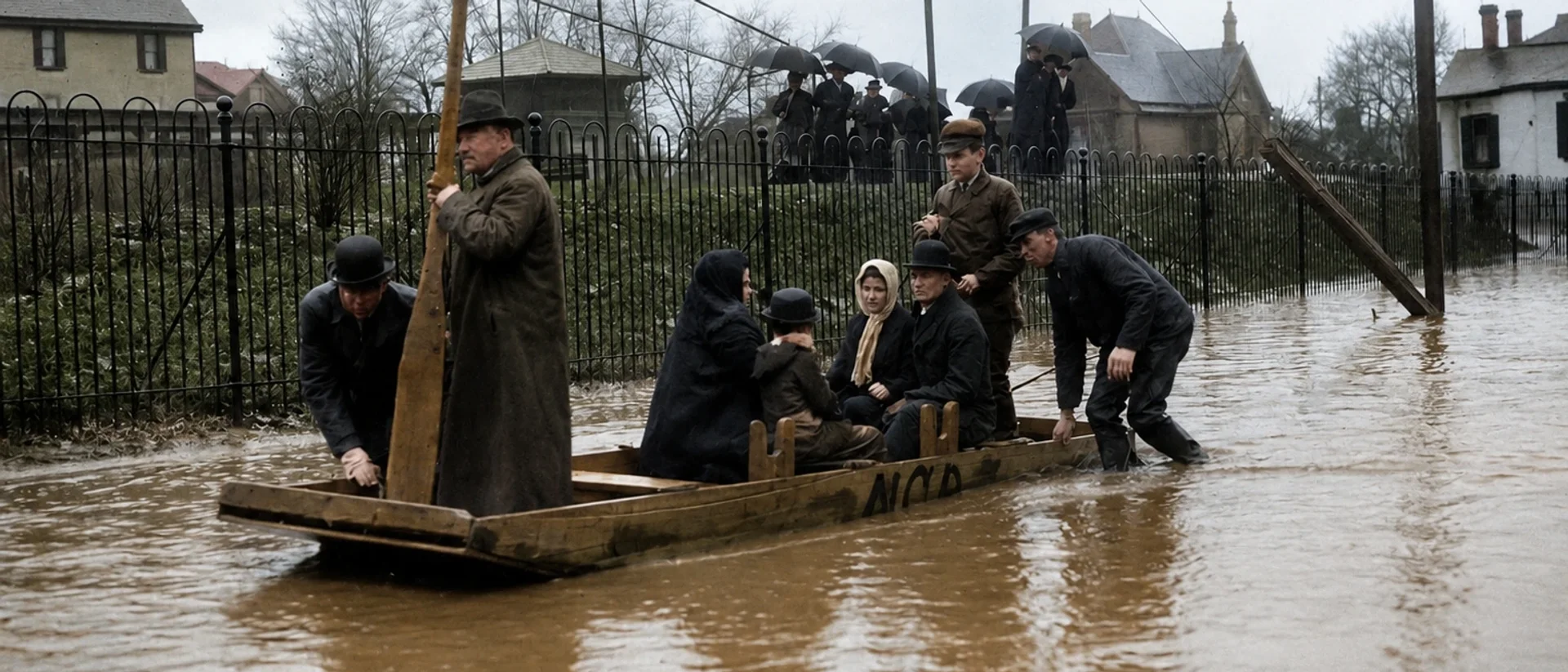
In March 1913, a flood put downtown Dayton, Ohio under 20 feet of water. National Cash Register's president, John H. Patterson, turned his cash register factory into a boatyard. Workers built nearly 300 boats and pulled thousands of people off rooftops. The factory became the city's hospital and shelter. Then Patterson led the campaign for the flood-control dams that still protect Dayton today.
The Cash Register Company That Saved Its Flooded City
In March 1913, three days of rain sent the Great Miami River over its banks and buried downtown Dayton, Ohio under as much as 20 feet of water. The city's mayor was trapped in his own house. The National Cash Register Company, the company that dominated the cash register business, put its factory to work on something else entirely.
A Factory Becomes a Boatyard
NCR's president, John H. Patterson, effectively took charge of the city while civic leaders were cut off by the floodwaters. He ordered his workers to build boats.
They built nearly 300 flat-bottomed rescue boats, working inside the same buildings where the company normally assembled cash registers.
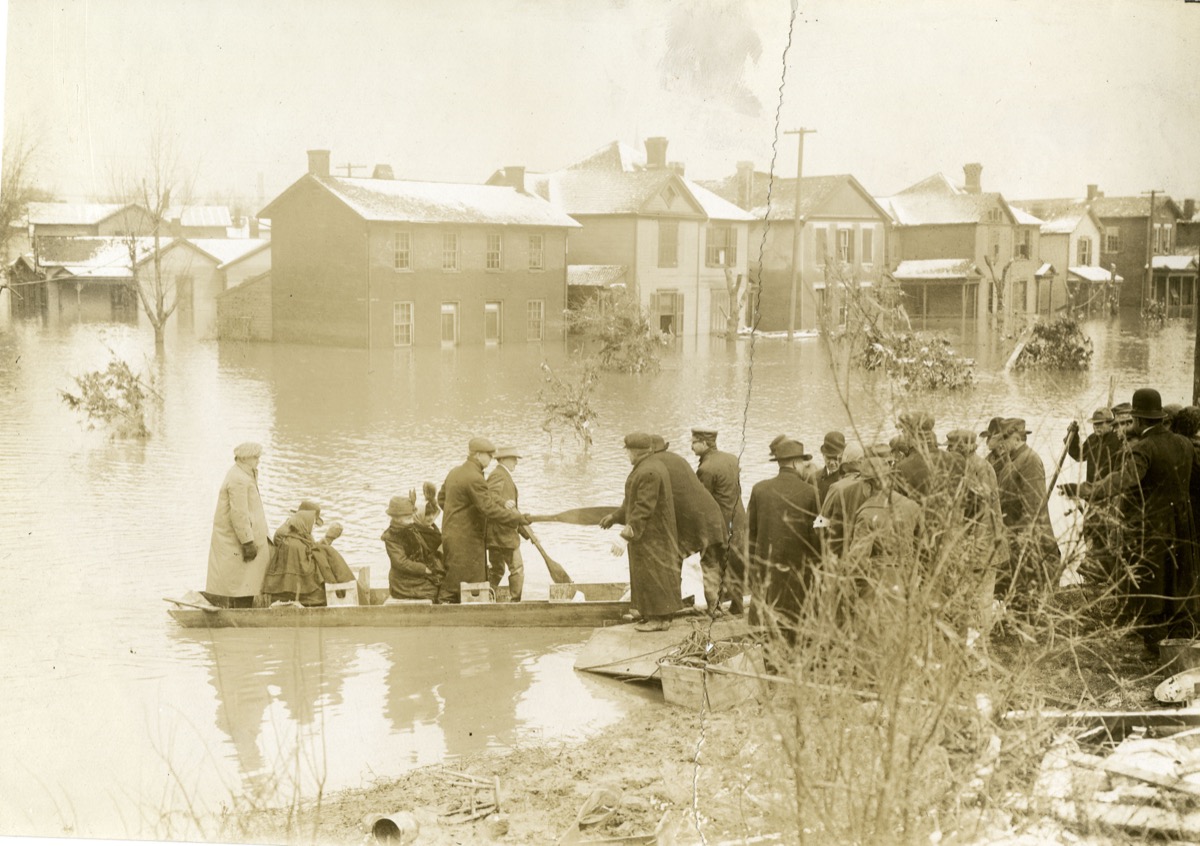
Patterson organized rescue teams to carry the boats out into the flooded streets. They pulled thousands of Daytonians off rooftops and out of upper-floor windows.
The Factory That Became a Hospital
NCR's complex on Stewart Street sat on high ground above the flood line. Patterson turned it into an emergency shelter, feeding and housing anyone who reached it.
The factory became the local headquarters for the American Red Cross and the Ohio National Guard. It held a makeshift hospital, a morgue, and a campground for people who had lost their homes.
When the presses of the Dayton Daily News flooded out, the paper ran off NCR's own printing press instead, keeping the story of the disaster on the national wire.
The Executive Who Was Also on Trial
Weeks before the flood, Patterson and 27 other NCR executives had been convicted under the Sherman Antitrust Act and sentenced to a year in prison for anti-competitive sales practices.
One of the men convicted alongside him was a young sales manager named Thomas Watson, who Patterson would fire from NCR the following year. Watson went on to run the company that became IBM.
The flood rescue turned public opinion sharply in Patterson's favor. In 1915, an appeals court overturned the convictions, ruling that key defense evidence should have been allowed at trial.
What Came After
Patterson used his standing after the flood to push for permanent flood control. His campaign led directly to the creation of the Miami Conservancy District in 1915, one of the first flood-control districts in the United States. The district's five dry dams and 55 miles of levee, finished in 1922, still protect Dayton and the cities along the Great Miami River today.
Enjoyed this fact?
Be the first to love this
Get a new fact every morning.
A fascinating fact in your inbox every morning. Free. Unsubscribe anytime.
Frequently Asked Questions
How deep was the water in downtown Dayton during the 1913 flood?
How many boats did NCR build during the Dayton flood?
What happened to John H. Patterson's antitrust conviction?
Did Thomas Watson of IBM work at NCR during the 1913 flood?
What did NCR's factory become during the flood?
Verified Fact
Verified Oct 9, 2026 · 6 sources checked
Source: Wikipedia (Great Dayton Flood)Show verification details
Claims checked
- Dayton flood reached 20 feet downtown (March 1913)
- NCR built nearly 300 flat-bottomed rescue boats
- NCR factory served as shelter, hospital, and rescue HQ
- Patterson convicted in 1912 antitrust case, conviction overturned 1915
- Watson fired by Patterson in 1914, not 1913 as some accounts imply
- Patterson's campaign led to the Miami Conservancy District (1915), whose five dams and 55 miles of levee have protected the Dayton area since 1922
Sources: Wikipedia, YouTube (University of Dayton), Miami Conservancy District (mcdwater.org)
Related Topics
More from History & Culture
View all History & Culture →