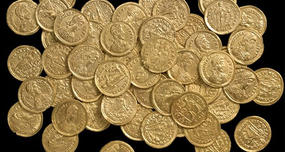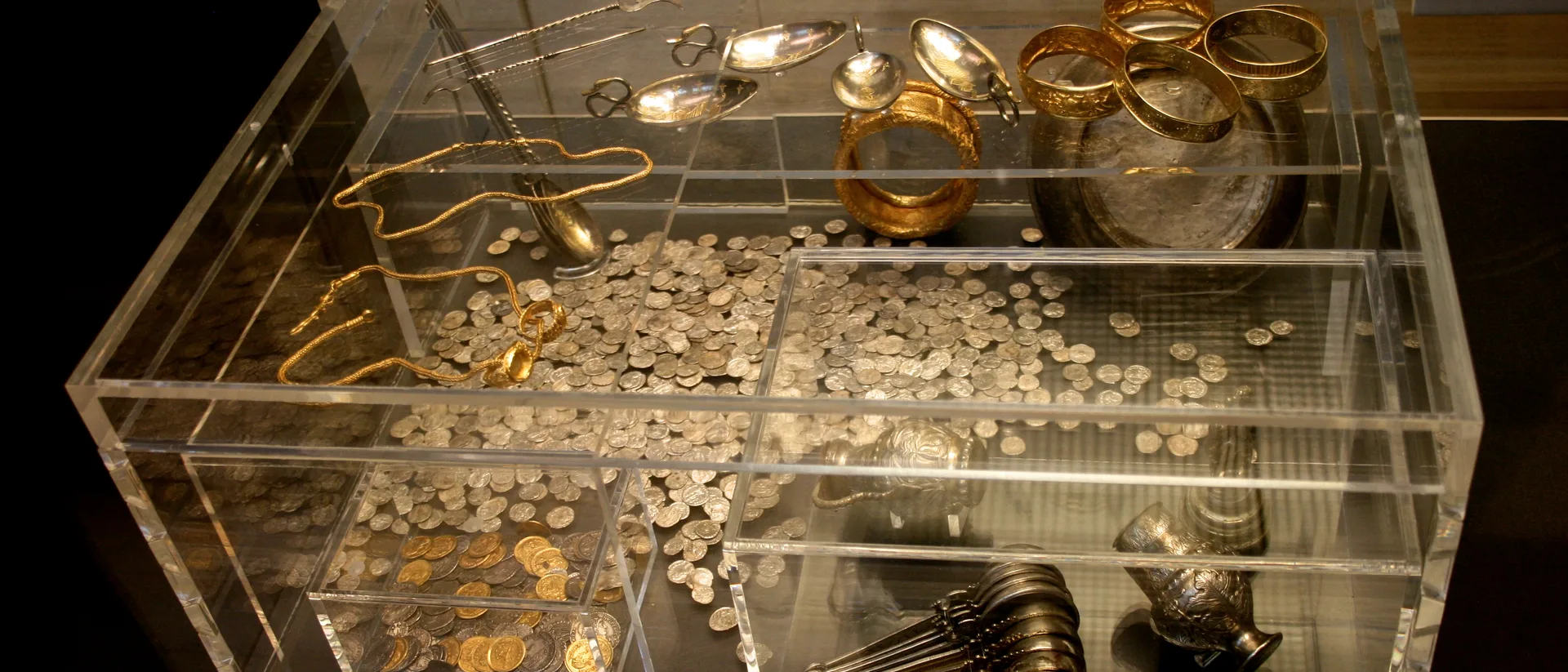
A retired gardener borrowed a metal detector in 1992 to find a lost hammer in a Suffolk field. Instead, he uncovered 14,865 Roman coins and 200 pieces of ancient jewelry - the largest late Roman treasure hoard ever found in Britain, valued at £1.75 million. They found the hammer too. It's in the British Museum.
A Retired Gardener Borrowed a Metal Detector to Find a Lost Hammer - and Dug Up the Largest Roman Treasure Hoard in British History
On November 16, 1992, retired gardener Eric Lawes set out into a field in Hoxne, Suffolk, with a simple goal: find a hammer his friend Peter Whatling had lost somewhere in the soil. Whatling was a farmer, and Lawes had borrowed his metal detector for the search.
The detector started signaling almost immediately. But what Lawes pulled from the ground was not a hammer. It was gold and silver coins - lots of them. He dug carefully, filling several bags, then contacted the Suffolk Archaeological Unit. Professional archaeologists arrived the next day and conducted a proper excavation over the following 48 hours.
What they uncovered was extraordinary: 14,865 Roman coins in gold, silver, and bronze, along with approximately 200 silver spoons, gold jewelry, and other precious objects. It was the largest hoard of late Roman gold and silver ever discovered in Britain.
What Was in the Hoxne Hoard?
The collection spans roughly 70 years of Roman coinage, with the latest coins dating to around 407-408 AD - right around the time Roman authority was collapsing in Britain. The coins include gold solidi, silver siliquae, and bronze nummi.
Beyond coins, the hoard contained stunning examples of late Roman craftsmanship. There were gold body chains, silver spoons and ladles, silver bowls, and several pepper pots (called piperatoria). One pepper pot, shaped like a Roman empress known as the "Empress pepper pot," has become one of the most famous objects in the British Museum's Roman collection.
The objects were found inside a small oak chest, which had mostly rotted away but left behind its iron fittings and hinges. Archaeologists believe a wealthy Romano-British family buried the chest around 400-450 AD, probably intending to return for it during a period of instability.
The Treasure Valuation
Under the Treasure Act, the hoard was declared treasure trove. The British Museum's Treasure Valuation Committee assessed the collection at 1.75 million GBP. This reward was paid to Lawes, who shared it with farmer Peter Whatling - a notably generous gesture, since legally only the finder was entitled to the payment.
The entire Hoxne Hoard is now permanently housed in the British Museum in London, where it occupies a dedicated display in Room 49.
And the Hammer?
Yes - Peter Whatling's lost hammer was eventually recovered during the archaeological excavation. It was donated to the British Museum, where it sits alongside one of the most valuable Roman treasure collections ever found. A small iron hammer that accidentally led to the discovery of nearly 15,000 ancient coins and a fortune in Roman gold.
Enjoyed this? Get a new fact every morning.
A fascinating fact in your inbox every morning. Free. Unsubscribe anytime.
Frequently Asked Questions
What is the Hoxne Hoard?
Who found the Hoxne Hoard?
How much is the Hoxne Hoard worth?
Where is the Hoxne Hoard now?
Verified Fact
Verified via Wikipedia
Source: WikipediaShow verification details
Eric Lawes confirmed as retired gardener. 14,865 coins confirmed. 1.75 million GBP valuation confirmed. Hammer recovered and donated to British Museum. November 16, 1992 discovery date confirmed.
Related Topics
More from History & Culture
View all History & Culture →