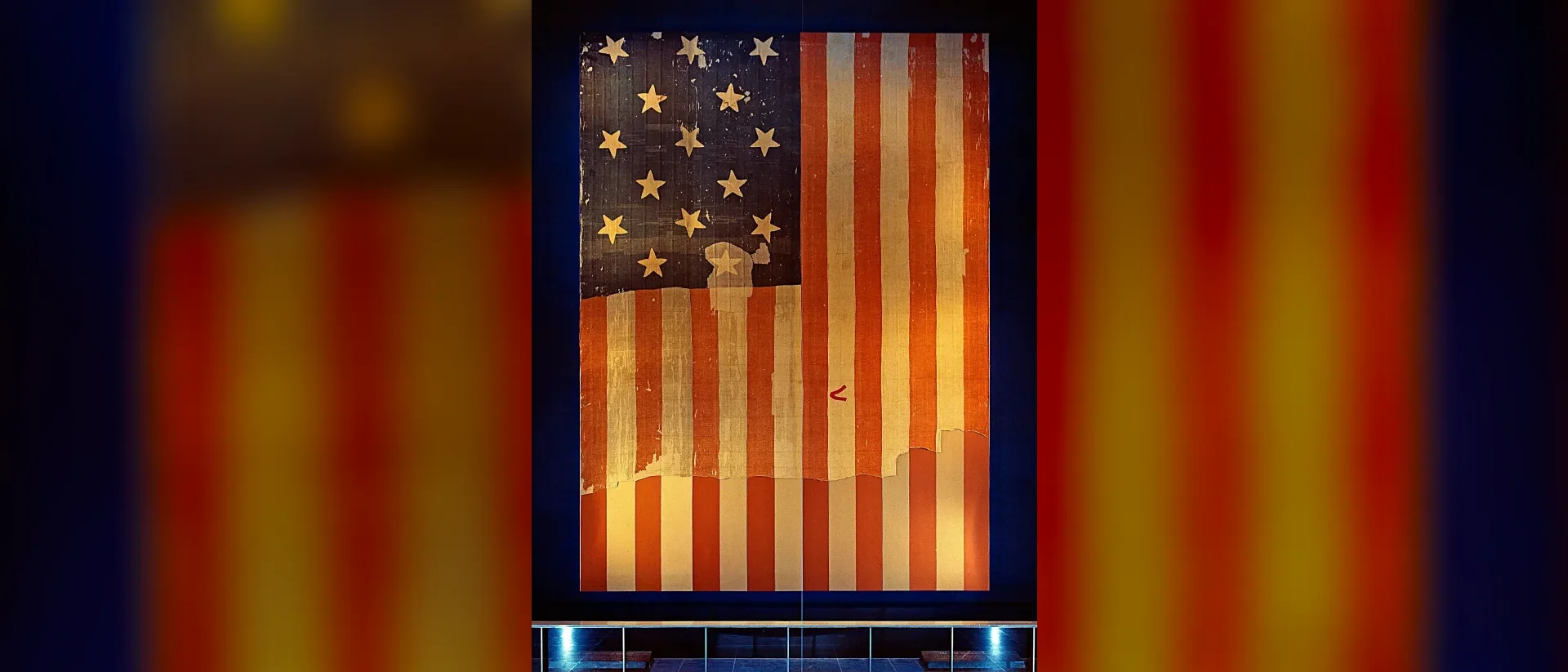
The Star-Spangled Banner, the flag that inspired America's national anthem, is missing an entire star. Louisa Armistead, widow of the fort's commander, cut it out to honor someone, and nobody knows where it went. Souvenir cutting and wear also shortened the flag from 42 feet to 34 feet. Visitors can still see the gap at the National Museum of American History.
The Star-Spangled Banner Is Missing a Star
The flag that inspired America's national anthem is missing an entire star. Louisa Armistead, widow of the commander of Fort McHenry, cut it out and gave it to someone to honor them. The Smithsonian, which has held the flag for more than a century, says it does not know who received the star, when, or where it is now.
Not a Bomb, a Pair of Scissors
Many visitors assume the gap is a battle wound, a spot where a bomb tore through the cloth during the attack on Baltimore. The museum's own answer is blunt: it is not.
The Smithsonian says Louisa Armistead, who owned the flag for many years, cut out the fifteenth star and gave it away. The museum has never found a credible lead on where it went.
Her daughter Georgiana later wrote that the star was cut out for "some official person." She never said who. That is all the record offers.
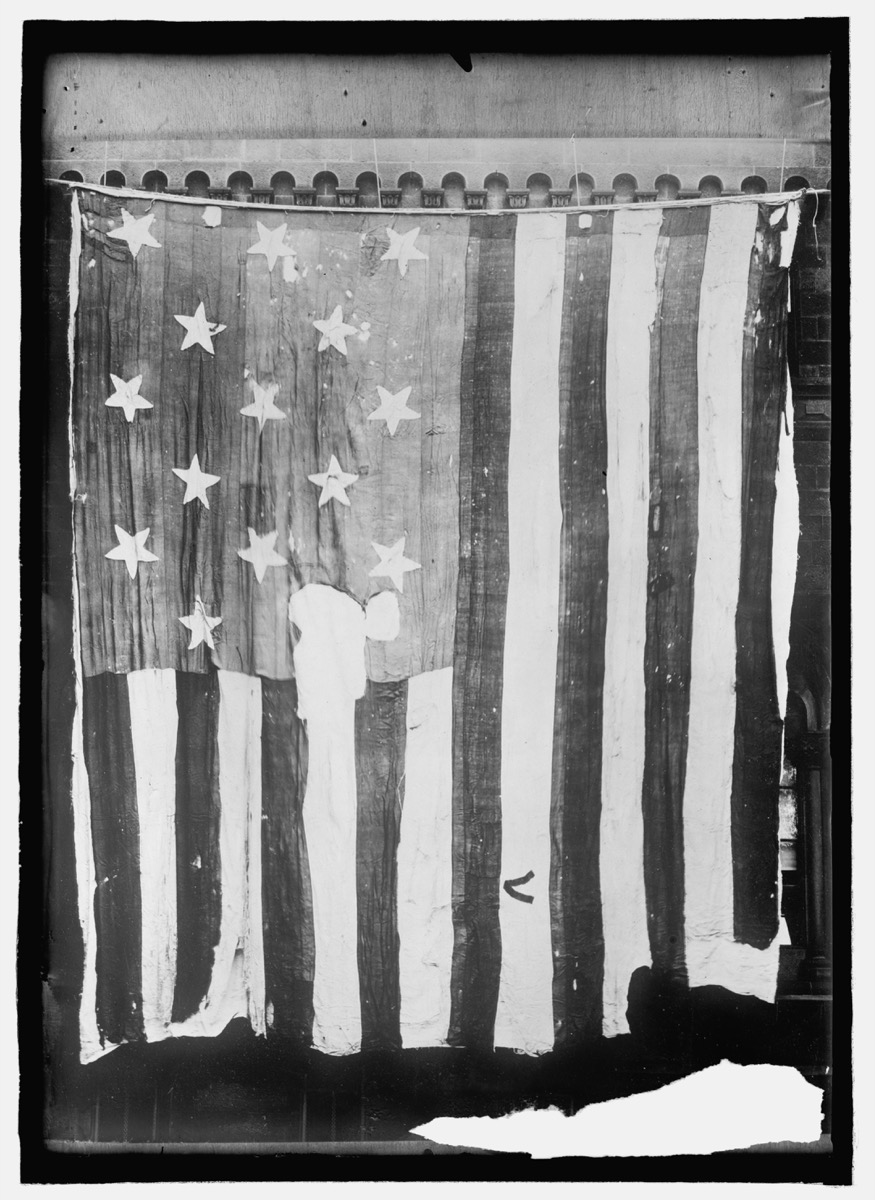
A Flag Handed Out in Pieces
The star was not the only piece to leave the family. Baltimore flagmaker Mary Pickersgill made the flag, with wool bunting for the blue canton and the stripes and cotton for the stars. After the battle, the flag came into the possession of the fort's commander, George Armistead.
For decades his family gave small cuttings to officials and acquaintances as a mark of respect. Smithsonian curator Marilyn Zoidis has described the practice as a way of saving history, giving someone a piece of the national story.
Many of those pieces have since been lost, kept in private homes or buried with the people who received them.
The flag was originally 30 by 42 feet. Nearly eight feet were snipped off the end in the nineteenth century as souvenirs, and the flag is now 30 by 34 feet. Wear over the years took more of the fly edge.
Where It Rests Now
The flag passed from George Armistead to his wife Louisa, then to their daughter Georgiana. Her son, Eben Appleton, donated it to the Smithsonian.
Today it lies at a shallow angle of about 10 degrees in a sealed, climate-controlled chamber in low light, built to keep gravity from pulling on the fragile wool. It is on view in the Star-Spangled Banner gallery at the National Museum of American History in Washington.
The fifteenth star is still missing. The museum's own FAQ ends the entry with an invitation: if anyone finds it, let the curators know.
Enjoyed this fact?
Be the first to love this
Get a new fact every morning.
A fascinating fact in your inbox every morning. Free. Unsubscribe anytime.
Frequently Asked Questions
Where is the missing star from the Star-Spangled Banner?
Was the hole in the Star-Spangled Banner caused by a bomb?
How big is the Star-Spangled Banner?
Where can you see the original Star-Spangled Banner?
Verified Fact
Verified Oct 21, 2026 · 5 sources checked
Source: Smithsonian National Museum of American HistoryShow verification details
Claims checked
- The Smithsonian says Louisa Armistead cut the fifteenth star out of the flag and gave it to someone to honor them
- The museum does not know who received the star, when, or where it is now
- The flag was originally 30 by 42 feet and is now 30 by 34 feet, from souvenir cutting plus wear and repair of the fly edge
- The flag lies at about a 10 degree angle in a low-light protective chamber at the National Museum of American History
- The Armistead family gave small cuttings to officials and acquaintances, and some pieces were buried with their recipients
Sources: Smithsonian National Museum of American History, Smithsonian Magazine, CBS News
Related Topics
More from History & Culture
View all History & Culture →