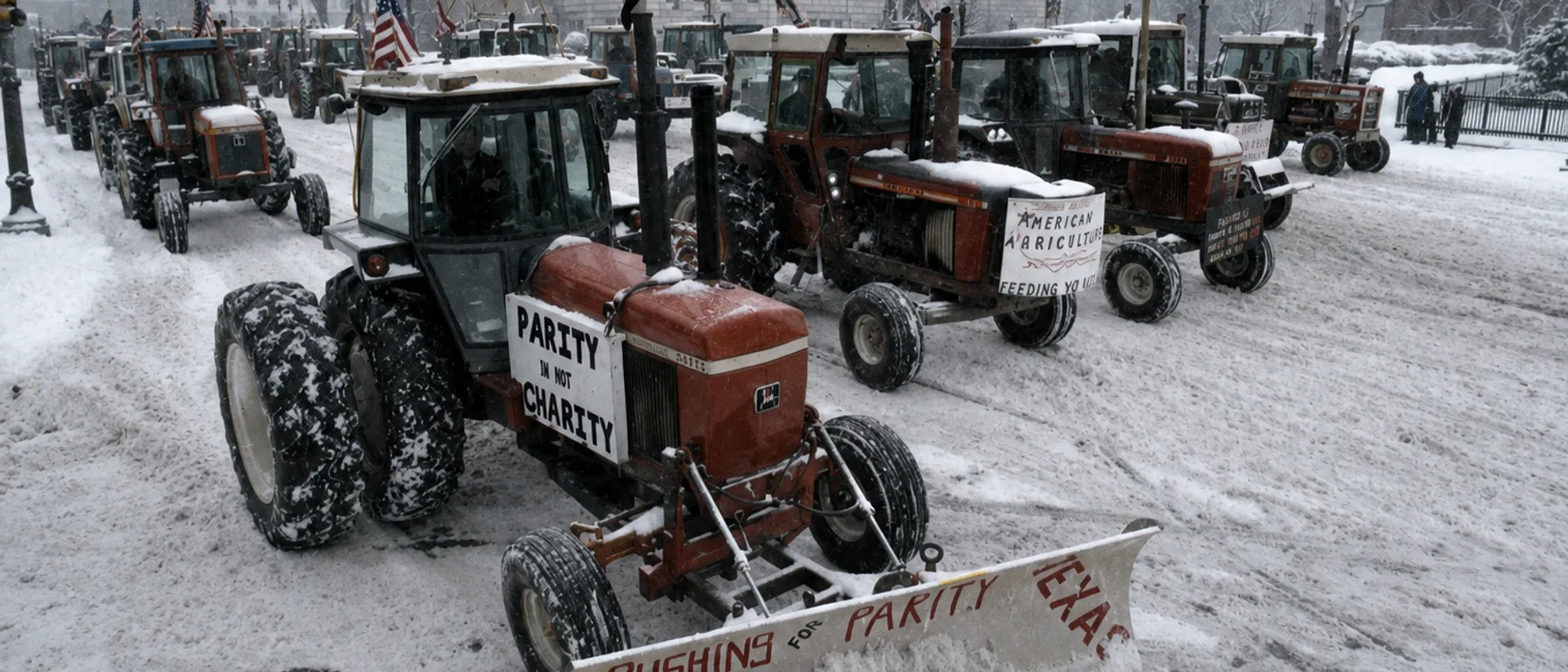
Thousands of farmers drove tractors into Washington DC in February 1979 to protest farm policy. Police barricaded the tractors on the National Mall, and locals called them a nuisance. A Presidents Day blizzard then buried the city under two feet of snow. The stranded tractors were among the only vehicles still moving. Farmers plowed streets and drove doctors and nurses to hospitals. The city that scorned them started thanking them.
How a Tractor Protest Ended Up Saving Washington DC
For two weeks, the tractors camped out on the National Mall were Washington DC's biggest headache. Residents complained about the traffic, the noise, and the torn-up grass. Then the snow started falling, and the same machines everyone wanted gone turned into one of the only things keeping the city moving.
A Protest Nobody Wanted
The tractors belonged to the American Agriculture Movement, a group of farmers pushing Congress for relief from falling crop prices and rising costs. On February 5, 1979, hundreds of tractors rolled into Washington DC for a second "Tractorcade," having traveled from as far as Texas, Michigan, and Colorado at a top speed of about 15 miles per hour. The convoy snarled traffic across the city and pushed Metro ridership to a single-day record.
Police responded by barricading the tractors on the National Mall, confining the farmers to the same ground they had occupied. The city estimated the standoff was costing around $125,000 a day, and the National Park Service later put damage to the Mall's grounds at close to $1 million. Residents and members of Congress had little patience left for the visitors camped in their front yard.
Then the Snow Came
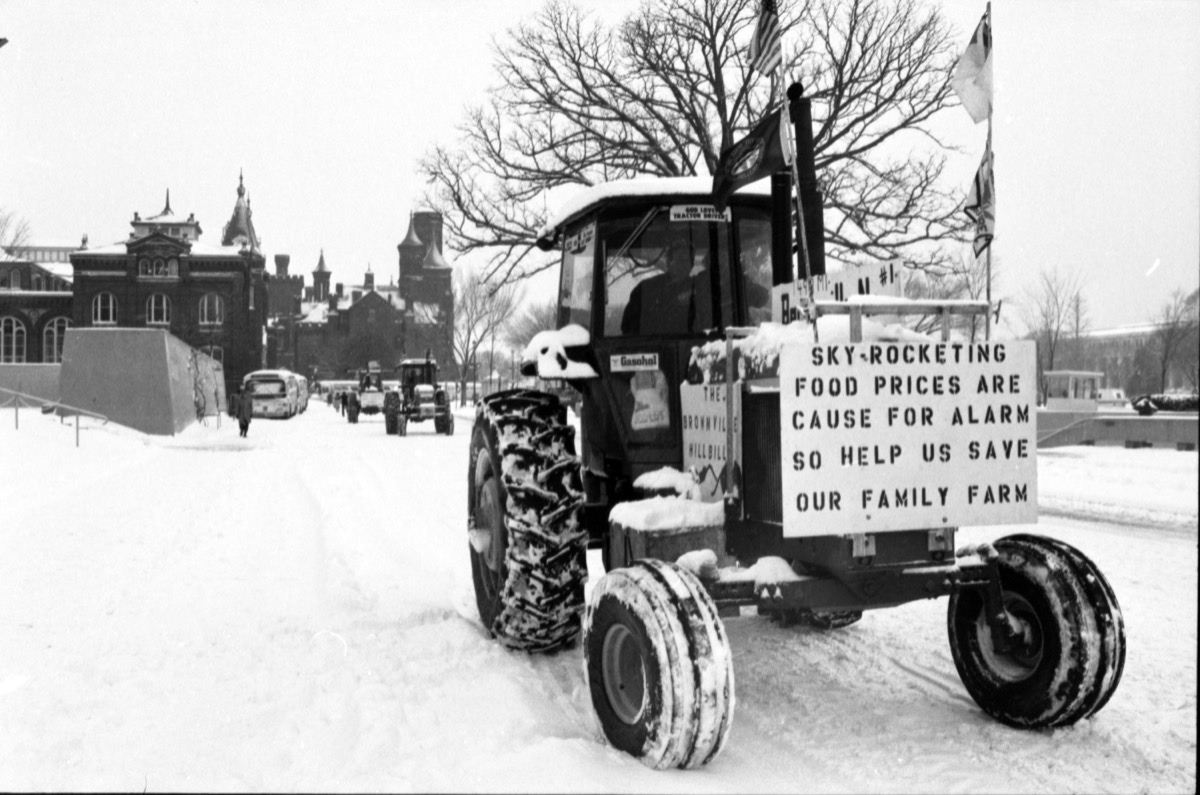
On February 18 and 19, 1979, a Presidents' Day storm hit the region far harder than forecasters expected. They had called for two to four inches. Instead, more than two feet of snow buried parts of the city. Interstates 95 and 495 nearly shut down completely, all three area airports closed, and Washington's entire bus fleet of about 500 vehicles was pulled off the roads, with roughly 90 stuck in the drifts.
The Machines Nobody Wanted Became the Ones That Worked
With the city paralyzed, the impounded tractors turned out to be some of the only vehicles that could still move through the drifts. Farmers began plowing streets on their own and offering their equipment to DC and its suburbs.
According to Boundary Stones, a history project run by public broadcaster WETA, farmers ferried doctors, nurses, and emergency vehicles to and from hospitals across the area for as long as the storm lasted. Farmers reportedly gave newly elected Senator John Warner a ride to the Capitol when nothing else could get through.
The shift in attitude was immediate. A cab driver who had been fed up with the tractor protest days earlier told a reporter he now believed the farmers "need a break."
The Goodwill Only Went So Far
Public sympathy did not translate into a lasting welcome. On February 23, just days after the blizzard, DC's police chief banned future Tractorcades, citing a lack of "responsible leadership" among the group. The farmers packed up and left the Mall by the start of March, and a group of Maryland farmers stayed behind long enough to reseed the grass their tractors had torn up.
The farm policy fight that brought the Tractorcade to Washington in the first place mostly fizzled. But for one snowbound week in February 1979, the machines Washington had tried to shut out were the reason parts of the city kept running at all.
Enjoyed this? Get a new fact every morning.
A fascinating fact in your inbox every morning. Free. Unsubscribe anytime.
Frequently Asked Questions
What was the Tractorcade of 1979?
Why did farmers drive tractors to Washington DC in 1979?
How did farmers help during the 1979 Washington DC blizzard?
How much snow fell in the 1979 Presidents' Day blizzard?
Did Washington DC's opinion of the farmers change after the blizzard?
Verified Fact
Verified Aug 4, 2026 · 6 sources checked
Source: Boundary Stones (WETA)Show verification details
Claims checked
- Thousands of farmers drove tractors into DC in February 1979 to protest farm policy
- A blizzard on Presidents Day 1979 buried the city in over two feet of snow
- Farmers plowed streets and ferried doctors and nurses to hospitals
- Police banned future tractorcades days after the blizzard
- Senator John Warner hitched a ride with farmers to the Capitol
Sources: Boundary Stones (WETA), Wikipedia, Mall History, Smithsonian Institution Archives, Greater Greater Washington
Related Topics
More from History & Culture
View all History & Culture →