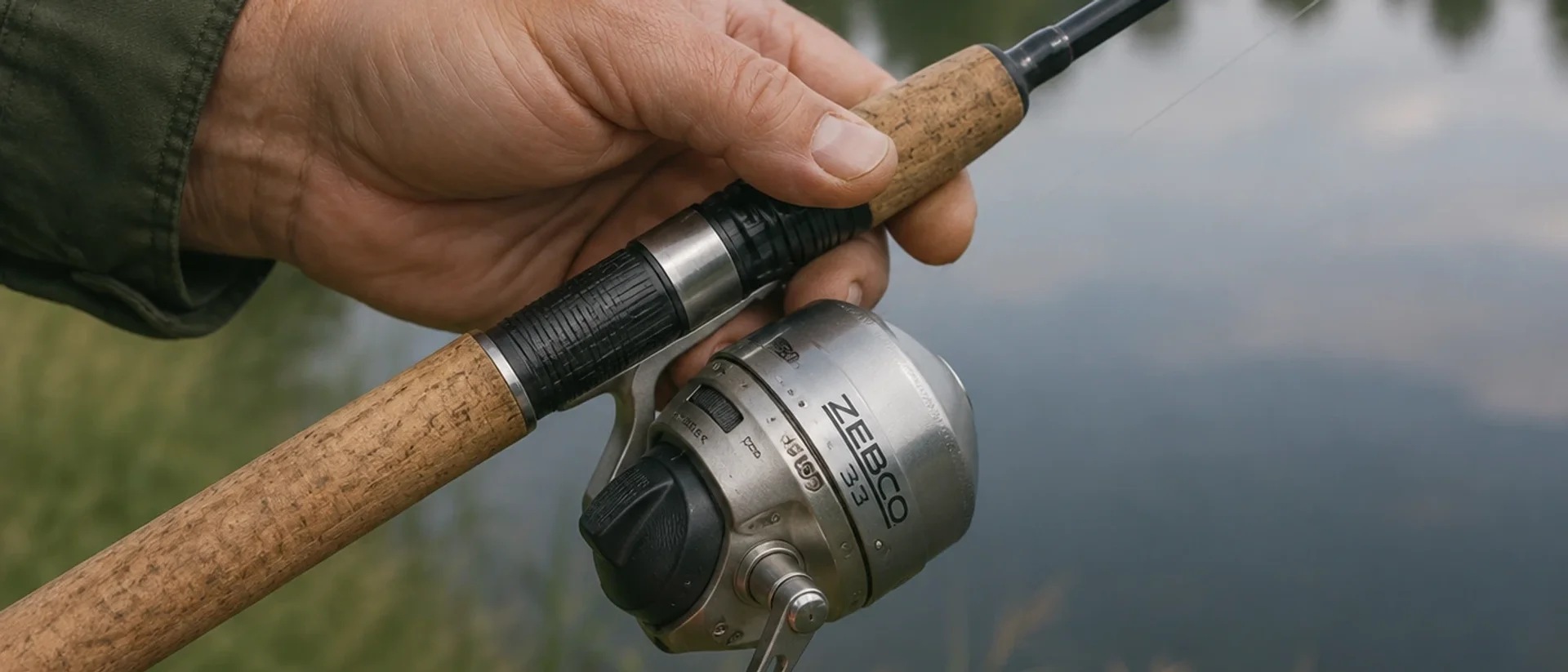
Zebco is the push-button fishing reel your dad handed you. Its maker, the Zero Hour Bomb Company, made oil-well bombs - until its patents ran out. In 1947, Texas watchmaker R.D. Hull brought a fix: a board of nails and a coffee-can lid, an idea from a grocery clerk pulling string off a spool. It worked, and the bomb company renamed itself Zebco: ZEro hour Bomb COmpany. Someone is still handing one to a kid right now.
Zebco Fishing Reels Were Invented by a Bomb Company
Long before it became one of the most recognizable names in American fishing, Zebco was the Zero Hour Bomb Company - a Tulsa, Oklahoma outfit that built electric time bombs to blast open oil wells. The push-button reel that ended up in millions of tackle boxes was never supposed to exist.
A Company Built on Blasting Oil Wells
The Zero Hour Bomb Company was incorporated in Tulsa in 1932. Its business was "shooting" oil and gas wells - lowering electric time bombs down the shaft to fracture the rock and get more product flowing.
The work dried up fast after World War II. Military demand for the company's timers vanished, the postwar oil business slowed, and the company's key patents were set to expire by 1948. It needed a new product, and fast.
The Watchmaker's Idea
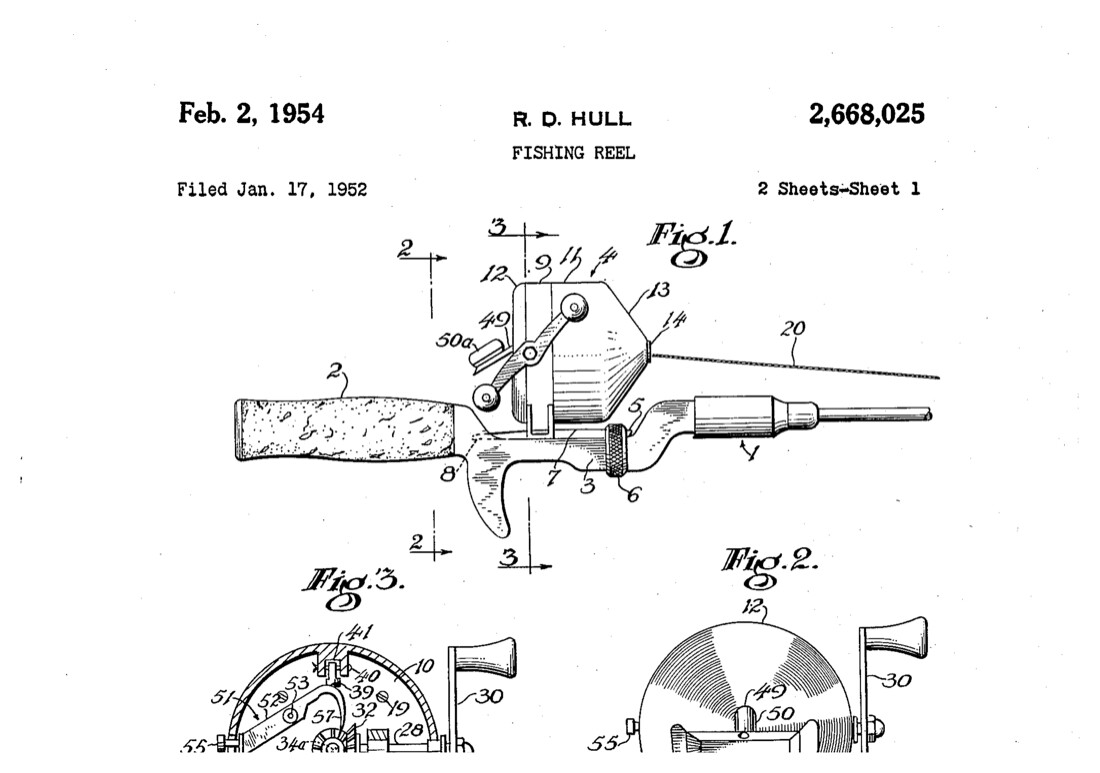
In 1947, an amateur inventor and watchmaker named R.D. Hull showed up with one. Hull was from Rotan, a small town in West Texas, and he'd been turning an idea over in his head.
He'd watched a grocery clerk pull string off a large fixed spool to wrap a package. The string never tangled, because the spool never moved. Hull thought the same principle could fix the worst problem in fishing: backlash, the tangled bird's-nest of line that plagued every open casting reel of the era.
A Board of Nails and a Coffee-Can Lid
Hull's first working model wasn't much to look at. It was a piece of plywood studded with nails in a circle, wrapped with fishing line, topped with a spinning coffee-can lid to control the release.
He brought it to the Zero Hour Bomb Company. Whatever the bomb makers thought of a watchmaker walking in with a coffee-can lid, they built it. The reel, called the Standard, went into production on May 13, 1949, and made its public debut at a Tulsa sporting goods show that June.
It was enclosed and push-button, engineered so the line couldn't tangle into the backlash that plagued every open reel. A friend joked that the finished reel looked like a beer can. Hull, in on the joke, built a novelty version to match - proof he didn't mind the comparison.
The Bomb Company Becomes Zebco
The reel sold. In 1954 came the Zebco 33, priced at $19.50, the model that would go on to teach more Americans to fish than perhaps any other. In 1961 the company added the 202 "ZeeBee" spincast to the line.
By 1956 the reel business was doing well enough that the Zero Hour Bomb Company officially renamed itself - Zebco, short for Zero hour Bomb Company.
By 1975, when Hull was inducted into the Sporting Goods Hall of Fame, an estimated 70 million Zebco reels had been sold. He'd designed 26 different reels and held 35 patents by the time he retired in 1977, the year he died at 65.
Zebco's headquarters is still in Tulsa today, a few miles from the building where a company built to blast oil wells open decided, on a watchmaker's word, to make fishing gear instead.
Enjoyed this? Get a new fact every morning.
A fascinating fact in your inbox every morning. Free. Unsubscribe anytime.
Frequently Asked Questions
What does ZEBCO stand for?
Who invented the Zebco fishing reel?
When was the first Zebco reel released?
Why couldn't the original Zebco reel backlash or tangle?
Is Zebco still based in Tulsa, Oklahoma?
Verified Fact
Verified Aug 19, 2026 · 2 sources checked
Source: American Oil & Gas Historical SocietyShow verification details
Claims checked
- Zero Hour Bomb Company made oil-well bombs, founded 1932
- Expiring patents drove the pivot to fishing reels
- R.D. Hull's prototype used plywood, nails, and a coffee-can lid
- Company renamed Zebco in 1956, short for Zero Hour Bomb Company
- 70 million reels sold by 1975
Sources: American Oil & Gas Historical Society, Oklahoma Historical Society
Related Topics
More from History & Culture
View all History & Culture →