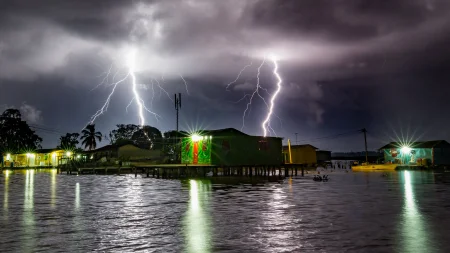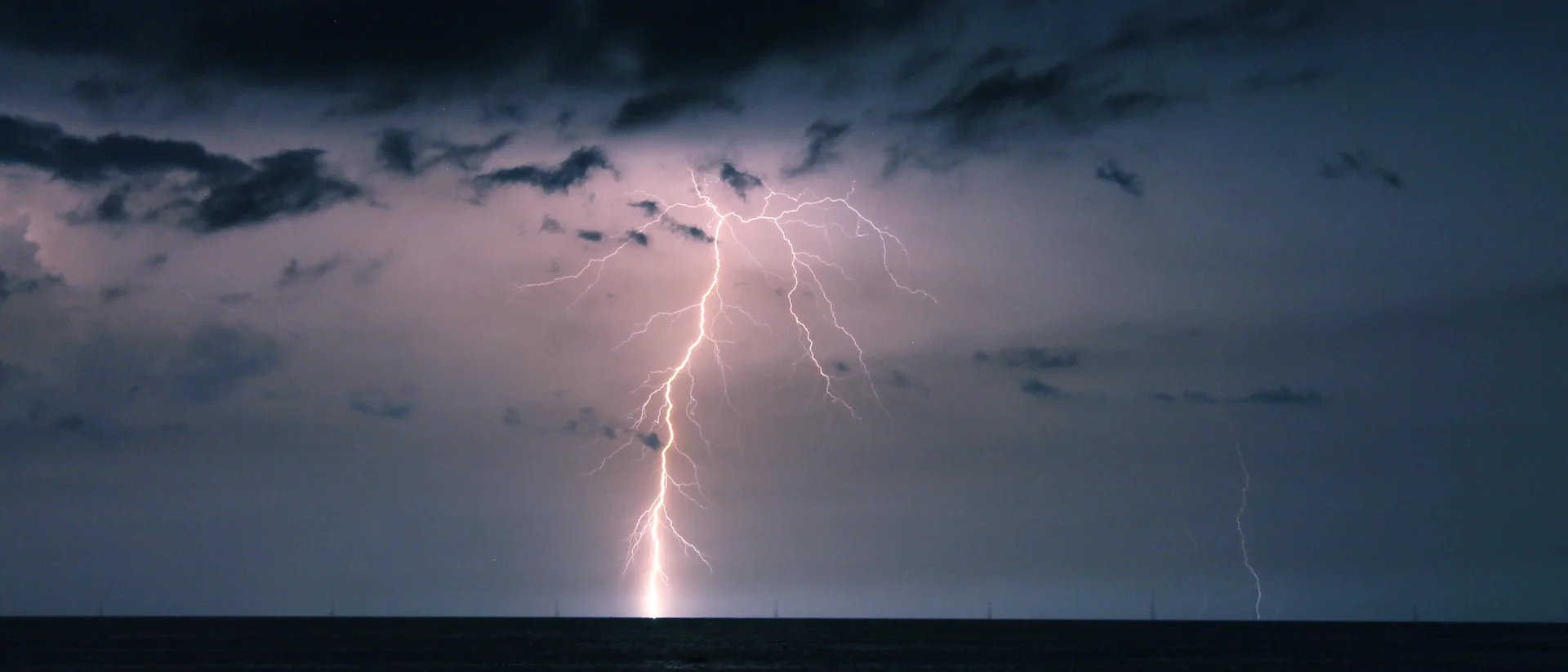
At the edge of Lake Maracaibo, Venezuela, a storm has returned night after night for centuries. It produces almost 250 lightning flashes per km2 per year - more than anywhere on Earth. Sailors gave it a name: the Beacon of Maracaibo. It fires 140 to 160 nights a year, for up to 9 hours a night. Zulia state put a white lightning bolt on its flag.
The Lightning Storm That Never Ends
Over Lake Maracaibo in northwest Venezuela, a thunderstorm ignites hundreds of nights a year with a fury unlike anywhere else on the planet. This is the Catatumbo Lightning - Relampago del Catatumbo in Spanish - and for centuries it has lit up the sky so reliably that Caribbean sailors used it to navigate in the dark.
Earth's Lightning Capital
Where the Catatumbo River drains into Lake Maracaibo, warm and moist Caribbean air pushes inland and meets cold air descending from the Andes and Perija Mountains. The result is a near-permanent electrical storm. Guinness World Records certifies it as the highest concentration of lightning on Earth - almost 250 flashes per square kilometre per year. The storm fires on roughly 140 to 160 nights per year, for up to 9 hours a night, at rates of 16 to 40 flashes per minute.
The Beacon Sailors Depended On
Colonial-era sailors navigating the Gulf of Venezuela and the Caribbean called it the Faro de Maracaibo - the Lighthouse of Maracaibo. Unlike a man-made lighthouse, this one needed no keeper and no maintenance. It simply fired, night after night, giving ships their bearings across miles of open water. NASA has featured it as one of the most remarkable persistent atmospheric phenomena on the planet, and the name has stuck for over four centuries.
A Legend Worth Telling Honestly
A popular story holds that in 1595, the English privateer Sir Francis Drake attempted a night raid on the city of Maracaibo, and the Catatumbo lightning silhouetted his ships, exposing the attack to Spanish defenders. The tale even appears in La Dragontea, an epic poem by Lope de Vega written in 1597. Historians have cast serious doubt on this account: Drake never attacked Maracaibo, and scholars believe the glow Lope de Vega described was from burning ships during a separate engagement in Puerto Rico. The legend persists - but it is a legend, not documented history.
On the Flag of an Entire State
What is fully documented: Zulia state - the Venezuelan state that holds Lake Maracaibo - put a white lightning bolt on its state flag, coat of arms, and official anthem. No government puts a weather event on its flag by accident. The Catatumbo Lightning has been firing long enough, reliably enough, and visibly enough that it became the defining symbol of an entire region. It still fires tonight.
Frequently Asked Questions
What is Catatumbo lightning?
How often does Catatumbo lightning occur?
Why is Catatumbo lightning called the Beacon of Maracaibo?
What causes Catatumbo lightning?
Is Catatumbo lightning on the Venezuelan flag?
Verified Fact
Verified Jun 24, 2026 · 5 sources checked
Source: Guinness World RecordsShow verification details
Claims checked
- Nearly 250 lightning flashes per km2 per year, highest on Earth
- 140 to 160 lightning nights per year, up to 9 hours each
- Sailors used it as a navigation beacon, called the Beacon of Maracaibo
- Zulia state flag shows a white lightning bolt
- Occurs hundreds of nights a year, not nearly every night
Sources: Guinness World Records, Wikipedia, NASA Earthdata, IFLScience, Maestrovirtuale
Related Topics
More from Places & Culture
View all Places & Culture →