
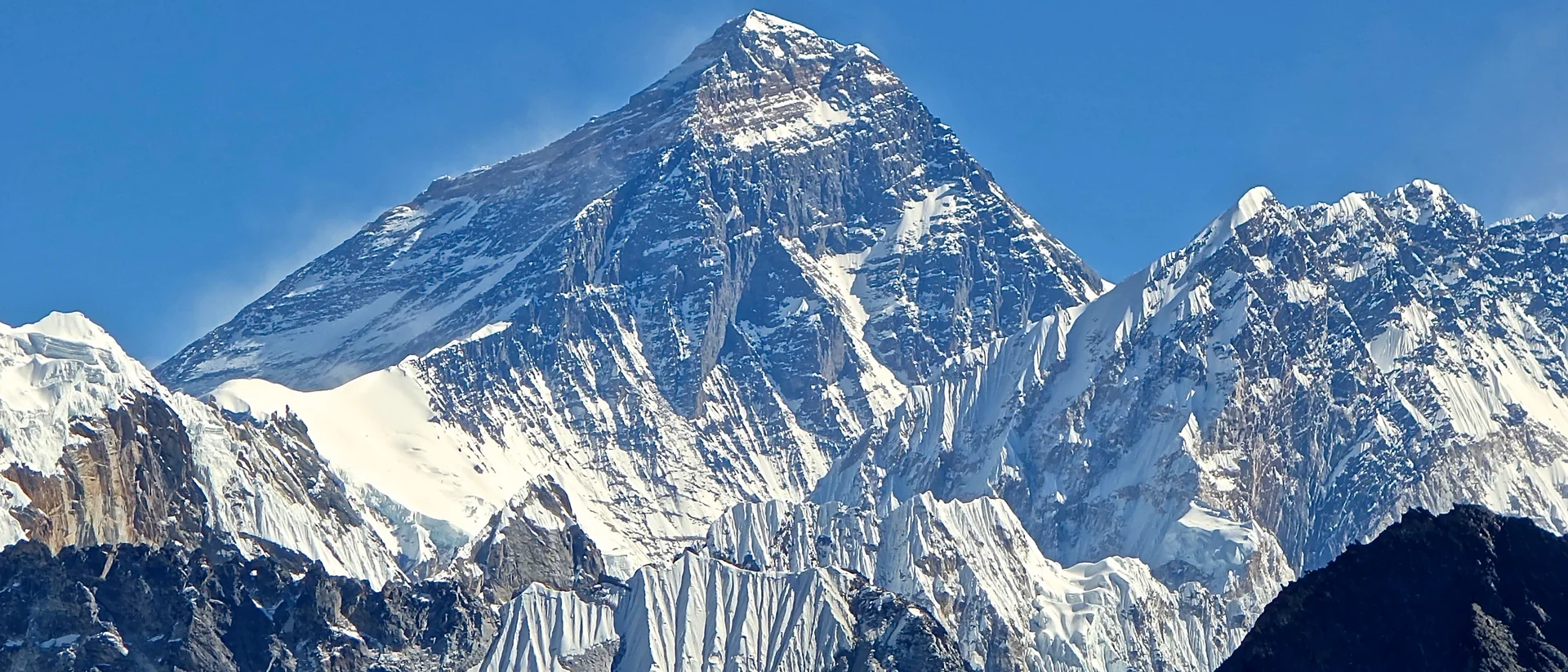
Mount Everest is still growing - and a river 75km away is why. The Arun river has carved a deep gorge, removing so much rock that the crust beneath springs upward. A 2024 UCL study found river erosion is a key driver of Everest's roughly 2mm annual rise. Everest already sits 15-50m taller than it would be without that river.
Mount Everest Is Still Growing - and a River Is Why
Mount Everest stands at 8,849 metres - the highest point on Earth. But a study published in Nature Geoscience in September 2024 revealed something few expected: the mountain is still growing, and a river 75 kilometres away is the reason.
The Second Force Pushing Everest Up
For decades, scientists understood that the collision of the Indian and Eurasian tectonic plates had pushed the Himalayas skyward over millions of years. That process continues today.
But researchers from University College London and the China University of Geosciences identified a second, overlooked force: erosion from a nearby river system.
The Arun river, a tributary of the Kosi river network running through Nepal, lies about 75 kilometres from Everest's summit.
As the river carves an increasingly deep gorge, it strips enormous volumes of rock from the landscape.
That removed material had been pressing down on the earth's crust - and with that weight gone, the crust springs back upward.
What Is Isostatic Rebound?
The process is called isostatic rebound.
Earth's crust floats on a hot, semi-molten layer called the mantle. When heavy material is removed from the surface - by erosion, or the melting of glaciers - the lighter crust slowly rises to compensate.
It is the same mechanism that has been lifting Scandinavia for thousands of years after its ice sheets melted.
For Everest, the UCL team found that the Arun river's erosion is a key driver of the mountain's observed growth of about 2 millimetres per year.
How It Started
The team pinned the key event to roughly 89,000 years ago, when the Arun river captured a neighbouring river network - a process geologists call "drainage piracy."
That dramatically increased the volume of water flowing through the Kosi system, amplifying its erosive power and removing rock at a faster rate.
Over the 89,000 years since that merger, the cumulative effect has been an extra 15 to 50 metres of height added to Everest.
The neighbouring peaks Lhotse and Makalu - the world's fourth and fifth highest mountains - have risen by a similar amount.
Makalu, which lies closest to the Arun river, may actually be rising at a slightly faster rate.
Still Rising
Adam Smith, a PhD student at UCL Earth Sciences and co-author of the study, noted: "Our research shows that as the nearby river system cuts deeper, the loss of material is causing the mountain to spring further upwards."
The finding is a reminder that even the most permanent-looking features of our planet are still slowly changing - shaped by forces operating far from their base.
Frequently Asked Questions
Why is Mount Everest still growing taller?
What is isostatic rebound?
How much taller has the Arun river made Everest?
When did the river start making Everest grow?
Are other Himalayan peaks also rising due to this river erosion?
Verified Fact
Verified Jun 29, 2026 · 5 sources checked
Source: UCL NewsShow verification details
Claims checked
- River erosion is a key driver of Everest's roughly 2mm annual rise
- Everest is 15-50m taller than it would be without the Arun river
- Arun river merged with the Kosi river network about 89,000 years ago
- Arun river is about 75km from Everest
- Makalu experiences slightly higher uplift than Everest
Sources: UCL News, ScienceDaily, phys.org, earth.com, Nature Geoscience