A Nintendo Game Boy survived a barracks bombing in the 1991 Gulf War. The front was charred and the A and B buttons melted - but Army medic Stephan Scoggins shipped the wreck to Nintendo, and technicians heard the startup chime plugging in Tetris. It still worked. Nintendo replaced his unit and displayed the original at their New York store. They quietly retired it in 2023 - over 30 years later.
The Game Boy That Survived a Gulf War Bombing
In 1991, U.S. Army medic Stephan Scoggins was stationed with the 44th Evacuation Hospital during Operation Desert Storm. He had brought a Nintendo Game Boy to pass the time. When a bomb struck his barracks, the fire tore through the building and destroyed nearly everything inside. Scoggins survived. His Game Boy, he assumed, did not.
Nintendo Called It a Lost Cause
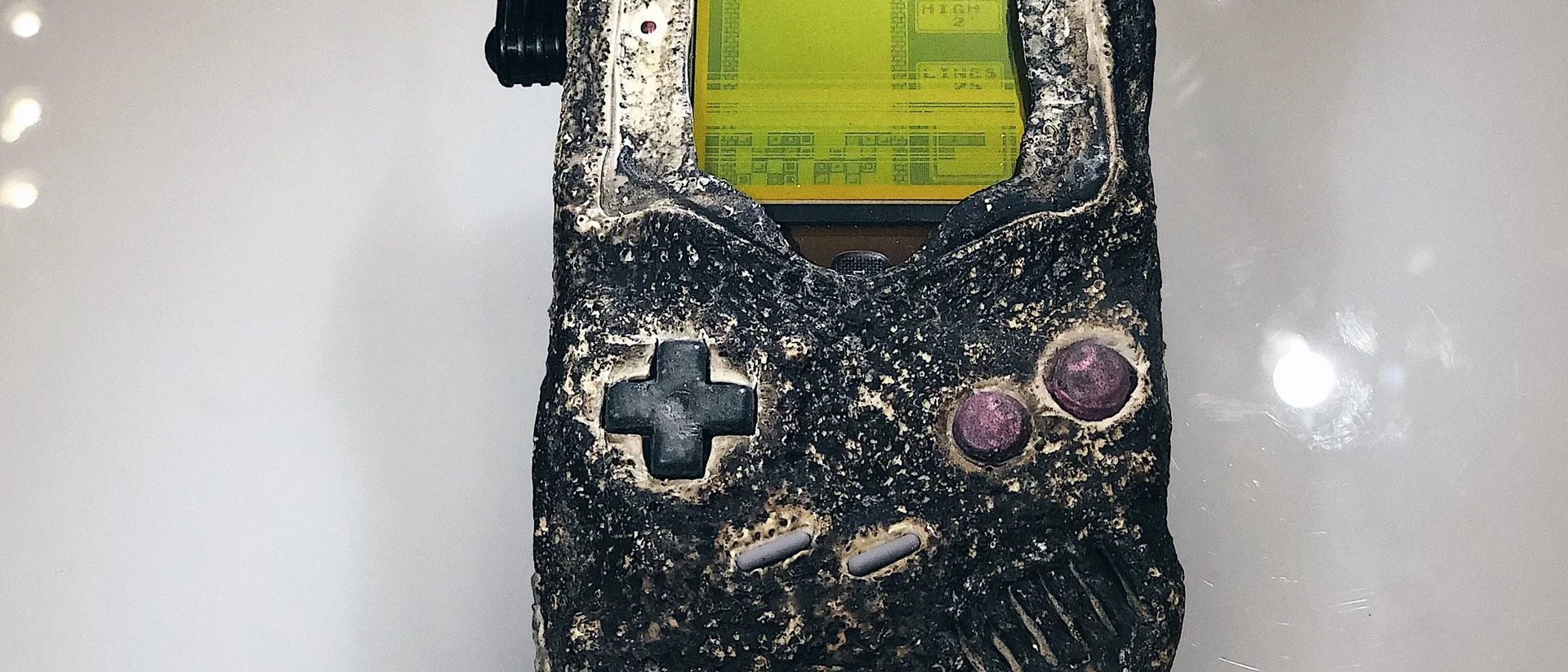
The damage was severe. The front casing was heavily scorched and warped. The Control Pad and the A and B buttons had melted away entirely, leaving the motherboard exposed to open air.
Scoggins wrote to Nintendo Power while still deployed, hesitantly asking if a replacement was possible, and shipped back what remained.
Nintendo's technicians took one look and wrote it off. Then, almost as an afterthought, someone slotted in a Tetris cartridge and swapped in a fresh battery pack.
The Game Boy produced its distinctive startup chime. The Start and Select buttons still clicked. The screen still lit up. It worked.
Nintendo Kept It
Rather than repair the unit, Nintendo sent Scoggins a brand-new replacement - what they called a special "Desert Storm courtesy." The charred original they kept, and it eventually went on permanent display at the Nintendo store in Rockefeller Center, New York - a store that didn't open until 2005 - sitting in a glass case with a looping demo of Tetris running on the screen.
The placard read: "This Game Boy was damaged when barracks were bombed during the 1990-1991 Gulf War. It still works."
Decades Under Glass
The Gulf War Game Boy became one of the most-photographed objects at Nintendo NY. Visitors would stop at the second-floor display to look at the melted buttons and scorched shell, and to watch Tetris play out on the screen.
Nintendo changed the batteries regularly and swapped the screen as needed, and the unit stayed on display there for close to two decades - part of the more than 30 years that had passed since Scoggins shipped it back from the Gulf.
Retired to Redmond
In mid-2023, a visitor noticed the case was empty. A staff member confirmed the console had been quietly removed and returned to Nintendo's headquarters in Redmond, Washington.
The screen had finally degraded beyond display condition after years of running the same game on a loop. Whether it will return to public display, perhaps at the Nintendo Museum that opened in Kyoto in October 2024, has not been confirmed by Nintendo.
Enjoyed this? Get a new fact every morning.
A fascinating fact in your inbox every morning. Free. Unsubscribe anytime.
Frequently Asked Questions
What happened to the Gulf War Game Boy?
Where is the Gulf War Game Boy now?
Who owned the Gulf War Game Boy?
Does the Gulf War Game Boy still work?
How long was the Gulf War Game Boy on display at Nintendo New York?
Verified Fact
Verified Aug 3, 2026 · 6 sources checked
Source: Nintendo LifeShow verification details
Claims checked
- Game Boy survived 1991 Gulf War barracks bombing
- A and B buttons melted, unit still played Tetris
- Army medic Stephan Scoggins shipped it to Nintendo
- Nintendo gave him a replacement and displayed original
- Unit retired in 2023; NY store display was about 18 years, not 30
Sources: Nintendo Life, We Are The Mighty, Military.com, Wikipedia, Siliconera, GamesRadar