
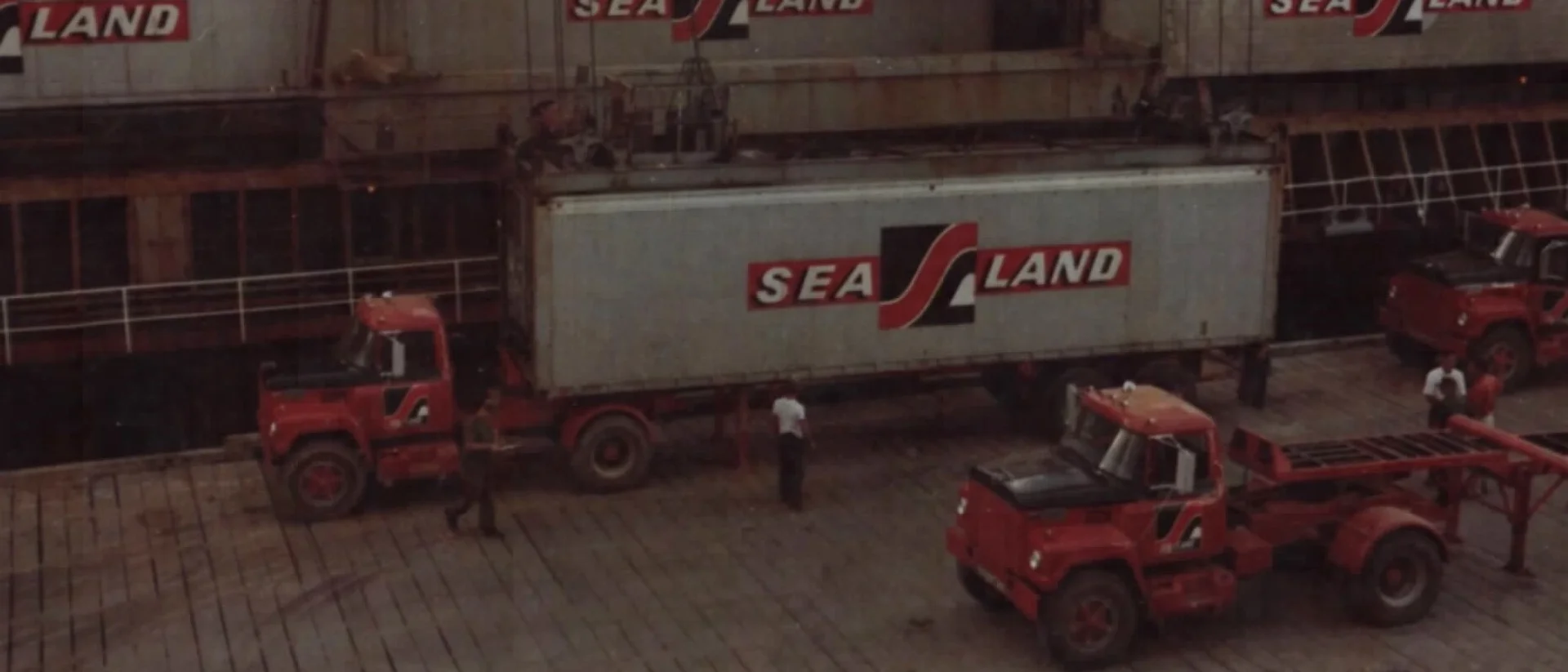
A converted oil tanker left Port Newark in 1956 with 58 steel boxes on its deck. The man behind it ran trucks, not ships. Malcom McLean bought a steamship line so cranes could lift his loaded trailers aboard. In 1963 his company gave the box corner patents away, royalty free, so rivals could copy them. Every container lifted onto a ship today still locks into those corners.
The Truck Driver Who Gave Away the Shipping Container
On April 26, 1956, a rebuilt oil tanker called the Ideal-X pulled away from Port Newark, New Jersey, with 58 steel boxes bolted to a deck laid over her pipework. Dignitaries watched from the pier. The man who had arranged the whole thing had spent his working life behind a steering wheel, not on a bridge.
He Started With One Used Truck
Malcom McLean finished high school in North Carolina in 1935 with no money for college. There was enough for a second-hand truck.
He and his brother Jim and sister Clara founded McLean Trucking that same year, hauling empty tobacco barrels out of Red Springs. McLean was one of the drivers.
By the early 1950s the company ran 1,776 trucks out of thirty-seven terminals, the fifth-largest fleet in the country.
What he could not fix was the dock. Freight came off a trailer piece by piece, carried aboard a ship by hand, then carried off again the same way at the other end.
In Marc Levinson's history The Box, McLean recalled sitting at a New Jersey pier in 1937 watching that happen and thinking the trailer itself should simply be lifted. The scene is McLean's own retelling rather than a document, but the frustration it describes is the whole idea.
So He Bought the Ships
In 1955 McLean sold his stake in the trucking company and bought a steamship line, Pan-Atlantic Steamship. Regulators would not let him own both.
Pan-Atlantic's engineers took a World War II T-2 tanker, rebuilt her at Bethlehem Steel in Baltimore, and laid a flat spar deck across the top so boxes could be stacked and chained down.
The Ideal-X sailed for Houston with 58 loaded boxes. Six days later they were hoisted off, bolted onto fresh running gear and driven to their destinations without a longshoreman handling the cargo inside.
The Engineer Who Drew the Corner
The boxes needed something the industry did not have: a way to grab, stack and lock a container without a man climbing on top of it with a hook.
That was the work of Keith Tantlinger, the engineer McLean hired to build the system. Tantlinger designed the corner casting and the twistlock that go on every intermodal container.
He also persuaded McLean that the boxes should come off the truck chassis entirely and be built with corner posts strong enough to stack.
The Patent They Gave Away
A fitting that every rival had to copy was worth holding. Sea-Land, as the company was renamed in 1960, did the opposite.
In January 1963 Sea-Land released its patent rights on the corner fitting and the twistlock, and McLean made the patents available by issuing a royalty-free lease to the International Organization for Standardization. Tantlinger, by then working for a trailer builder, was the man who had talked him into letting go.
Any competitor could now build a box that fitted any crane, any ship and any chassis. That is what turned one company's loading system into a world standard.
The sizes did not survive. Sea-Land's own box length was not one of the two the international standard settled on, 20 and 40 feet, so the containers on ships today are not built to his dimensions.
The corners are. The eight castings at the corners of every container, and the twistlocks that bite into them, are a modified version of the design Sea-Land signed away.
Seventy Years of Lifting
The Ideal-X herself lasted eight more years. Sold abroad in 1959 and renamed Elemir, she was damaged in 1964 and scrapped in Japan that October.
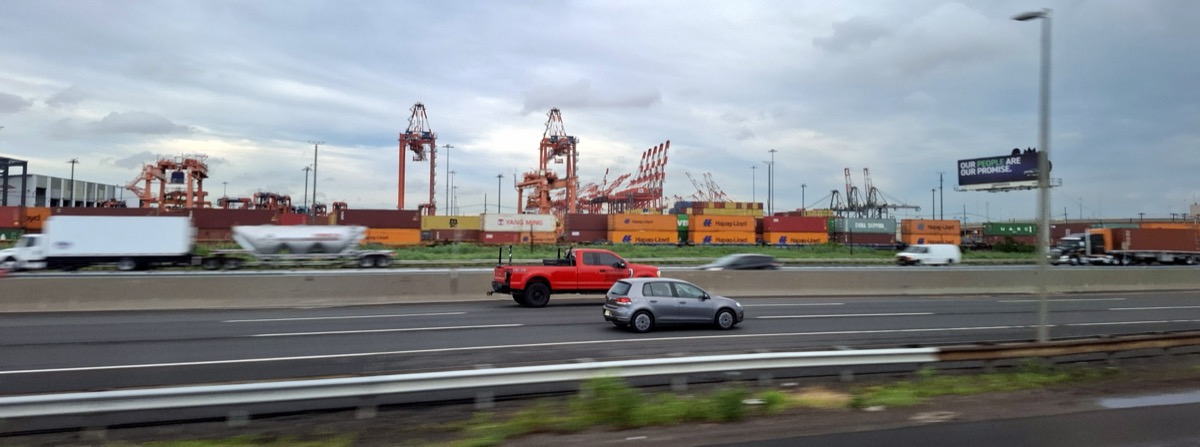
Port Newark grew into the container terminal that fills the shoreline there today.
Every box lifted off a ship today still locks into those corners.
Enjoyed this fact?
Be the first to love this
Get a new fact every morning.
A fascinating fact in your inbox every morning. Free. Unsubscribe anytime.
Frequently Asked Questions
Who invented the shipping container?
What was the first container ship?
Why are shipping containers all the same standard?
What is a container corner casting?
Are shipping containers still built to Sea-Land's size?
Verified Fact
Verified Sep 18, 2026 · 4 sources checked
Source: Harvard Business School Working KnowledgeShow verification details
Claims checked
- The Ideal-X left Port Newark on April 26, 1956 with 58 loaded boxes
- Malcom McLean ran the fifth-largest US trucking fleet before he bought ships
- Sea-Land gave up its corner fitting and twistlock patents in January 1963
- Keith Tantlinger designed the corner casting and the twistlock
Sources: Harvard Business School Working Knowledge, The New York Times, TR News, Wikipedia
Related Topics
More from Technology & Innovation
View all Technology & Innovation →