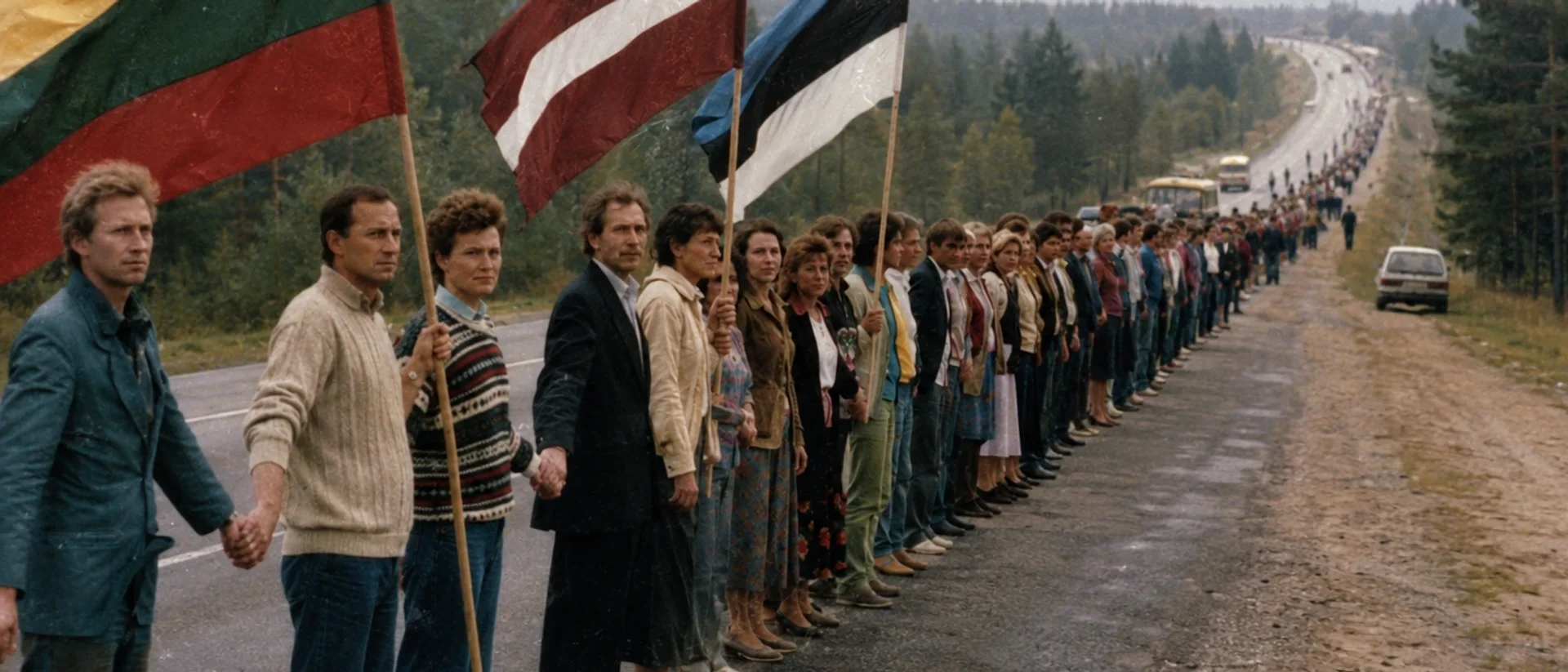
About two million people held hands across three countries on August 23, 1989. Their chain stretched 419 miles, from Tallinn through Riga to Vilnius. It is still the longest human chain ever to link multiple countries. They had no cell phones, only radios and buses to stay in sync. Within two years, all three nations broke free from Soviet rule.
2 Million People Formed a 419-Mile Human Chain
For fifteen minutes on a summer evening in 1989, you could have stood on almost any road in Estonia, Latvia or Lithuania and seen the same thing: hands, stretching to the horizon in both directions.
A Chain Three Countries Long
On August 23, 1989, an estimated two million people joined hands to form a single, unbroken human chain running from Tallinn, Estonia, through Riga, Latvia, to Vilnius, Lithuania.
The chain measured 675 kilometers (419 miles), according to Guinness World Records, which still recognizes it as the longest human chain ever formed across multiple countries.
It was organized by the three Baltic independence movements: Estonia's Rahvarinne, Latvia's Tautas fronte, and Lithuania's Sąjūdis.
No Phones, Just Radios and Timing
Cell phones were not something ordinary people carried in 1989.
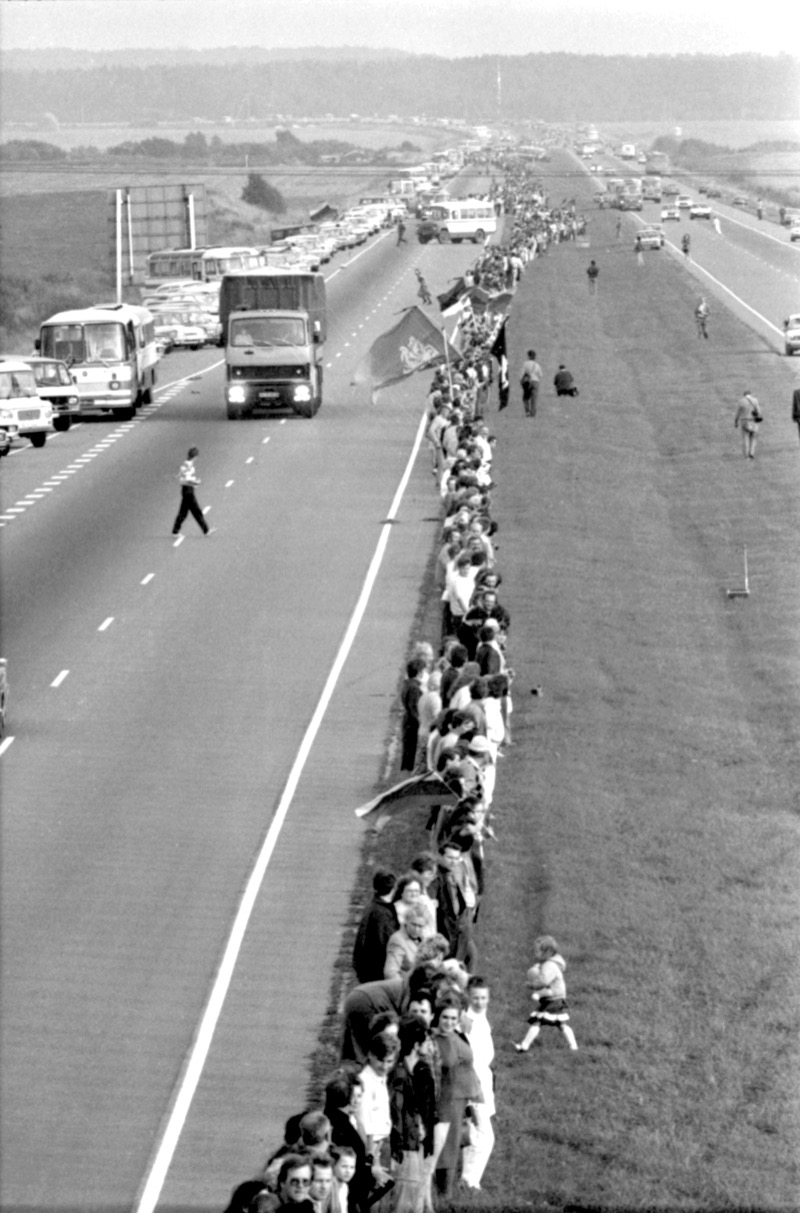
Organizers had to line up two million people along a precise 419-mile route without them.
They relied on portable radios, printed schedules, and free chartered buses to move people who lacked their own transport to the right stretch of road.
Estonia declared the day a public holiday so people could take part.
Why August 23
The date was not an accident.
August 23, 1989, marked the 50th anniversary of the Molotov-Ribbentrop Pact, the secret 1939 agreement between Nazi Germany and the Soviet Union whose hidden protocols had led to the Baltic states' annexation.
Organizers picked that exact anniversary to demand public acknowledgment of the pact and a renewal of independence.
The chain reached its full length around 7 p.m. local time and held for about fifteen minutes before people began heading home.
It became known as the Chain of Freedom.
What Happened Next
The demonstration worked faster than almost anyone expected.
In December 1989, the Congress of People's Deputies formally condemned the Molotov-Ribbentrop Pact's secret protocols.
Free elections in early 1990 returned pro-independence majorities across the region.
On March 11, 1990, Lithuania became the first Soviet republic to declare independence.
Estonia and Latvia followed in August 1991, and by the end of that year, all three nations' independence was recognized internationally.
The chain itself lasted fifteen minutes. What it started took less than two years to finish.
Enjoyed this? Get a new fact every morning.
A fascinating fact in your inbox every morning. Free. Unsubscribe anytime.
Frequently Asked Questions
How many people took part in the Baltic Way?
How long was the Baltic Way human chain?
How did organizers coordinate two million people without cell phones?
Why did the Baltic Way happen on August 23?
Did the Baltic Way lead to independence?
Verified Fact
Verified Jul 18, 2026 · 3 sources checked
Source: Guinness World RecordsShow verification details
Claims checked
- About two million people took part in the 1989 Baltic Way chain
- Chain stretched 419 miles from Tallinn through Riga to Vilnius on August 23, 1989
- Coordination used radios and free buses, not cell phones
- All three countries broke from Soviet rule within two years
- Participant figure corrected to "about two million" (was "two million")
Sources: Guinness World Records, Wikipedia, UNESCO