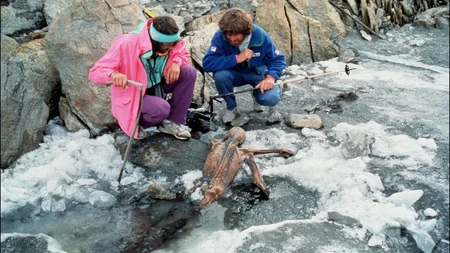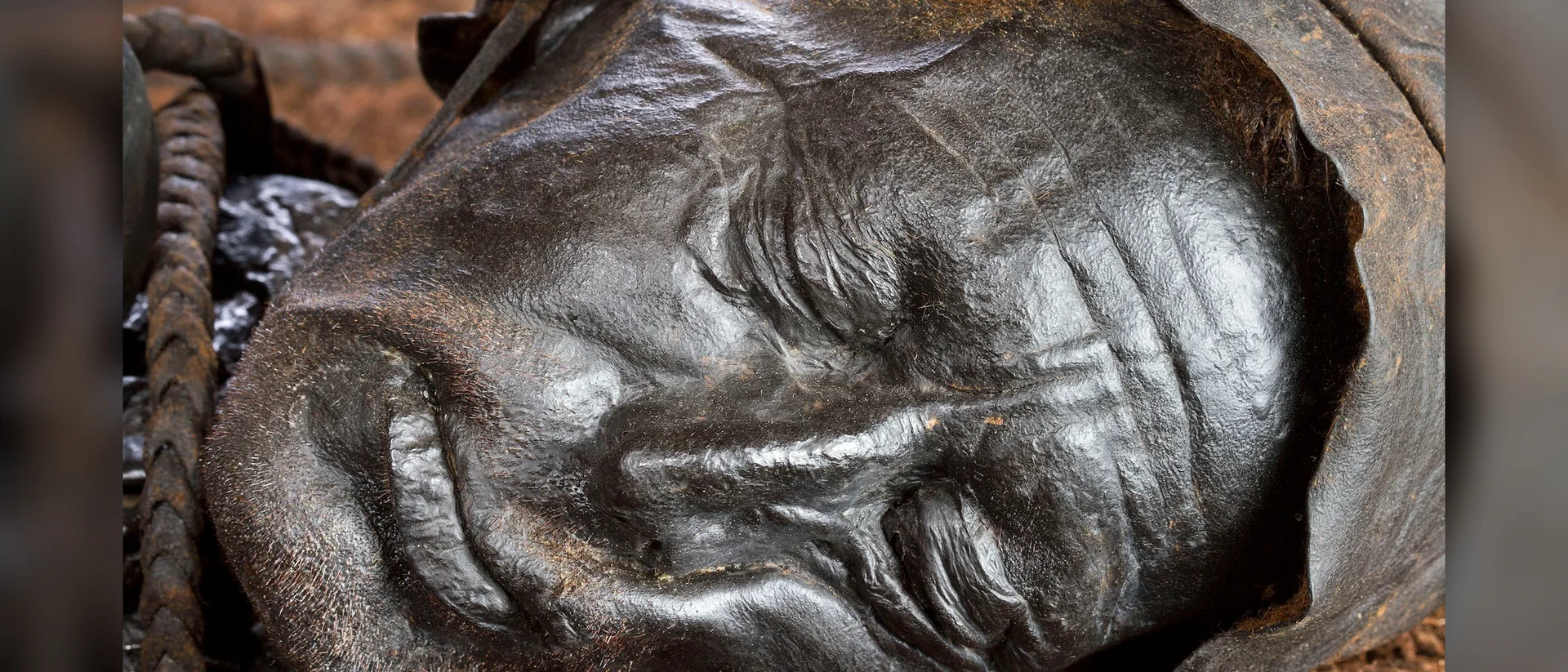
Two brothers were cutting peat in a Danish bog in 1950. They found a body so well preserved, they called the police. Closed eyes, stubble, a calm face. They were sure it was a recent crime. It was actually Tollund Man, dead for 2,400 years. A braided leather noose was still around his neck. Archaeologists believe he was a ritual sacrifice, not foul play. His last meal, a barley porridge, was still in his stomach.

Police Thought It Was Murder. He Was Dead 2,400 Years

4 viewsPosted 11 days agoUpdated 11 minutes ago

On May 8, 1950, two brothers cutting peat for fuel in the Bjaeldskovdal bog near Silkeborg, Denmark, struck something with their spades that made their blood run cold. Lying in the dark peat was a man's body, curled on his side, with closed eyes, visible stubble and an oddly peaceful expression. Certain they had stumbled onto a recent murder, they called the police.

A Body Too Well Preserved to Be Old

Officers and archaeologists from Museum Silkeborg arrived expecting a modern crime scene. Instead, they found a man who had been dead for roughly 2,400 years. The bog itself had done the preserving. Its acidic, oxygen-poor water and cold temperature had halted decay and tanned his skin like leather, keeping his face, fingerprints and even his internal organs remarkably intact.

The Noose Around His Neck

Around the man's neck was a braided leather noose, pulled tight enough to leave a furrow in his skin. The evidence pointed to death by hanging. Because the Iron Age communities of Jutland are known to have made offerings, including human bodies, in bogs believed to be gateways to the gods, many archaeologists believe he was not murdered or executed in the ordinary sense, but ritually sacrificed. The gentle positioning of his body and his closed eyes support that theory, though some researchers argue for an execution instead. The full truth may never be settled.

His Last Meal, Reconstructed

Scientists later examined the contents of his stomach and intestines. He had eaten a porridge made mostly of barley, along with flax and other seeds and a trace of fish, cooked in a clay pot and slightly burned. The meal was humble, the kind of food eaten by ordinary people, which only deepens the mystery of why he was chosen for such a fate.

Radiocarbon Dating Confirms the Age

Radiocarbon testing places his death between 405 and 380 BC, during Denmark's Pre-Roman Iron Age. Today, his head, one thumb and his feet are the only parts of the original body on display, reconstructed onto a replica torso at Museum Silkeborg, where visitors can still look into the same calm face that once convinced two peat cutters they had found a murder.

Enjoyed this? Get a new fact every day.

Follow FunFactz for the best ones in your feed.

or get one in your inbox

Frequently Asked Questions

Who was the Tollund Man?
The Tollund Man is the naturally mummified body of an Iron Age man found in a peat bog near Silkeborg, Denmark in 1950. He died around 405 to 380 BC and is one of the best preserved bog bodies ever discovered, with his face, stubble and even fingerprints still intact.
How old is the Tollund Man?
Radiocarbon dating places his death between 405 and 380 BC, making him roughly 2,400 years old. He lived during Denmark's Pre-Roman Iron Age, long before the Viking era.
How was the Tollund Man preserved so well?
The acidic, oxygen-poor water of the peat bog stopped normal decay and tanned his skin like leather. Bacteria could not survive in the cold, low-oxygen conditions, which is why his facial features and organs remained intact for over two thousand years.
Was the Tollund Man murdered?
He died by hanging, with a braided leather noose still around his neck when he was found. Most archaeologists believe he was a ritual sacrifice rather than the victim of a crime or an execution, though the exact reason for his death is still debated.
What was in the Tollund Man's stomach?
Scientists reconstructed his last meal from his stomach contents: a porridge made mostly of barley, along with flax, other seeds and a small amount of fish, cooked in a clay pot and slightly burned.

Verified Fact

Verified Jul 9, 2026

Source: National Geographic
Show verification details

Verified 2026-07-09. Sources: nationalgeographic.com/history/article/tollund-man-bog-body-life-death (source_url, confirmed live), en.wikipedia.org/wiki/Tollund_Man, museumsilkeborg.dk/the-discovery-of-tollund-man, museumsilkeborg.dk/why-did-tollund-man-have-to-die, phys.org 2021 gut-content study (Antiquity journal). Claims checked: 1950 discovery (May 6 found/May 8 reported to police, per Museum Silkeborg - text/article use the commonly-cited May 8 date, acceptable convention, both Wikipedia and Britannica also lead with May 8) CONFIRMED; discoverers were brothers (Viggo and Emil Hojgaard, per Wikipedia/Britannica - names not used in any fact field so no citation gap) CONFIRMED; Bjaeldskovdal bog near Silkeborg CONFIRMED by source_url and museum site; braided/plaited leather noose CONFIRMED (NatGeo image caption: braided rope around the neck; Wikipedia: plaited animal hide); death by hanging CONFIRMED (autopsy furrow marks, NatGeo, Wikipedia); barley porridge with flax/seeds/trace fish cooked in a clay pot and slightly burned CONFIRMED by phys.org 2021 Antiquity study; radiocarbon 405-380 BC CONFIRMED (Wikipedia, source_url); 2400-years figure reconciles arithmetically with 405-380 BC dating range - numeric coherence PASS. Ritual-sacrifice framing properly hedged throughout - text uses attributed belief (archaeologists believe/likely), article and FAQ explicitly present execution as a live scholarly alternative and state the cause of death is unresolved - matches NatGeo/Wikipedia framing, does not over-claim sacrifice as settled fact. Brand safety: all FB-facing fields (social_text, social_caption, social_engagement_comment, social_link_comment) use recent crime/foul play, no banned murder-family terms; on-site article HTML uses murder/murdered 3x descriptively (what discoverers believed) which is fine since article is not posted to FB. No emdashes in any field. social_text plain-text length 416c (within 280-420); social_caption 457c (within 400-499). CORRECTION MADE: social_engagement_comment claimed Germanic tribes buried TRAITORS under sticks in bogs - per Tacitus Germania as translated by Museum Silkeborg (why-did-tollund-man-have-to-die page), traitors and renegades were hanged in TREES; it was cowards/disgraced outcasts who were pinned under wicker hurdles in bogs - the fact conflated the two punishment categories (Wikipedia's own Tollund Man page makes the same traitors/sticks conflation, so this was a sourced-but-wrong detail, not a hallucination). Reworded to attribute the bog-pinning correctly to disgraced outcasts rather than traitors. No other fields required correction. Citation fidelity: source_url (National Geographic) directly supports discovery date, bog/location, braided noose, hanging, stomach contents, and hedges sacrifice vs alternative theories - confirmed via WebFetch, no source_url change needed. Engine=0 correctly labeled (no recognizable subject, archaeological-mystery story, not an anonymous-hero exceptional-gasp story) - not mislabeled. Gap noted (not blocking): proof_photo_strength and beat_freshness are NULL - flag for image-curator/content-creator to set per Breakout-Eligibility Gate.

Related Topics

More from History & Culture

View all History & Culture